€396m for tsunami victims as death toll mounts
World aid donations reached nearly €396m today as the Asian tsunami death toll soared to at least 120,000, but United Nations supremo Kofi Annan warned even more would be needed.
While the money starting rolling in, the world’s militaries were also gearing up to do their part. A US aircraft carrier battle group is on its way to Indonesia’s Sumatra island, which was closest to last Sunday’s quake and is home to most of the casualties.
A C-130 cargo plane touched down in Sumatra with blankets, medicine and the first of 80,000 body bags. New Zealand, Australia, Singapore, Pakistan and scores of other nations also had planes rushing aid to victims.
“This is an unprecedented global catastrophe and it requires an unprecedented global response,” UN secretary-general Annan said, as aid agencies warned that five million people lacked clean water, shelter, food, sanitation and medicine.
While the delivery of aid was being fast-tracked, a few survivors were still staggering out of ruined areas six days after the tsunamis. On one Indian island, people told tales days of thirst, hunger and miles of walking until - just at the point of rescue – a hungry pack of crocodiles tried to snap them up.
The refugees lived to tell the tale, thanks to Indian seamen who shot at the menacing reptiles as the fleeing refugees made their way to a rescue ship.
Death tolls across the region continued to grow. Indonesia led with 80,000. Sri Lanka reported 27,200, India more than 7,300 and Thailand around 2,400. A total of more than 300 were killed in Malaysia, Burma, Bangladesh, the Maldives, Somalia, Tanzania and Kenya.
The tally climbed sharply yesterday, when Indonesia uncovered more and more dead from ravaged Sumatra.
As more bodies were recovered, families around the Indian Rim and beyond endured their sixth day of ignorance as to the fate of friends and relatives who had taken a holiday-season vacation to the sunny beaches of Thailand, India and Sri Lanka. Tens of thousands were still missing, including at least 2,500 Swedes, more than 1,000 Germans and 500 each from France and Denmark.
In Sri Lanka, where more than 4,000 people are unaccounted for, television channels are devoting 10 minutes every hour to read the names and details of the missing. Often photos of the missing are shown with appeals that they should contact the family or police.
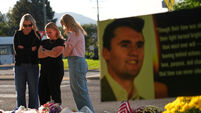
On the Thai resort island of Phuket, people scoured photos pinned to noticeboards of the dead and missing in scenes reminiscent of the aftermath of the September 11 2001 terror attacks in New York.
The search for loved ones on Sumatra was even less co-ordinated. One man was looking for his grandmother by checking corpse after corpse scattered over a road near her ruined home.
The delivery of aid to survivors on Sumatra speeded up with pilots dropping food to villagers stranded among bloating corpses, while police in a devastated provincial capital stripped looters of their clothing and forced them to sit on the street as a warning to others.
Another zone where officials have hardly begun to get a sense of the human cost was India’s remote Andaman and Nicobar islands, where entire villages were wiped out. With only 400 bodies found so far, the region’s administrator said 10,000 people were missing.
Governments had so far donated nearly €396m, Annan said, adding that he was “satisfied” by the response, even though another UN official earlier complained that the West had been “stingy” in the past.
“Over the past few days it has registered deeply in the consciousness and conscience of the world as we seek to grasp the speed, the force and magnitude with which it happened. But we must also remain committed for the longer term,” Annan said.
The United States, India, Australia, Japan and the United Nations have formed an international coalition to co-ordinate worldwide relief and reconstruction efforts.