Bush pledges long-term aid for Asia
The United States is focusing on providing clean water and basic sanitation in South Asian areas hit by an earthquake and tsunamis, to try to prevent illness and more deaths among survivors.
“Our efforts are focused, with the rest of the international community, on water and sanitation, because that is the greatest risk to people’s lives,” said Andrew Natsios, chief of the US Agency for International Development, which distributes foreign aid.
Natsios predicted the death toll eventually may exceed 100,000.
Water and sewage systems were inundated by the enormous surge of water that hit coastal areas on Sunday, following an earthquake deep in the Indian Ocean. The tidal waves left a trail of death and destruction in 11 countries.
“People are drinking sewage water,” Natsios said at a State Department briefing. “That will substantially increase the risk of communicable disease and diarrheal disease, which could kill many people in epidemics, if they get out of control.”
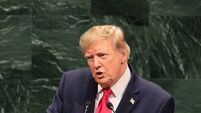
President George Bush assembled a four-nation coalition to organise humanitarian relief, and promised that the United States would help bankroll long-term rebuilding.
“It’s just beyond our comprehension to think about how many lives have been lost,” Bush said after emerging from a holiday vacation at his Texas ranch to make his first comments on the disaster.
Marc Grossman, under-secretary of state, will lead a US task force to co-ordinate the American response and urge other nations to assist in relief efforts. He took part in a 40-minute conference call last night with senior Japanese, Australian and Indian officials.
State Department spokesman Noel Clay said they agreed to try to avoid duplicating efforts, by each other and the United Nations, to help the victims.
US embassy officials continued to hunt for 2,000 to 3,000 Americans who remained unaccounted for in the coastalregions hit by the tsunamis, and asked travellers to check in with families and US diplomatic posts. At least 12 Americans were known dead from Sunday’s quake and subsequent tsunamis.
From airlifts of rice and water purifiers to the deployment of an entire Marine expeditionary force, the United States marshalled resources across the globe to augment its initial $35m (€25.7m) aid package and make sure the hardest hit locations got the short-term help they requested.
Bush said he phoned the leaders of stricken countries to solicit specific needs and assure them the initial aid package “is only the beginning of our help”. He also laid the foundation for a long-term international recovery plan by forming the coalition with Japan, Australia and India and inviting other nations to join.
Both the president and officials in Washington touted the breadth of US aid, ticking off figures they hoped would rebut comments by a UN official and others suggesting that the United States had been mean with the allocation of funds, or slow to react.
The president called the UN official’s comments “very misguided and ill informed”. His State Department spokesman was more blunt: “We don’t have anything to apologise for,” Richard Boucher said.

CONNECT WITH US TODAY



Be the first to know the latest news and updates