Russia calls for new terror list
Russia has taken its case for expanding the global war against terrorism to the United Nations, calling on the UN Security Council to establish a new list of terror suspects who would be subject to extradition.
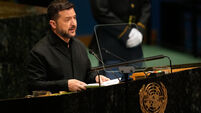
Russian foreign minister Sergey Lavrov, whose country has criticised Britain and other Western countries for granting asylum to Chechen leaders it has linked to violence, called on the international community to reject double-standards in defining terrorists.
“Those who slaughtered children in Beslan and hijacked airplanes to attack America are creatures of the same breed,” he said in a forceful speech to the UN General Assembly.
“Harbouring terrorists, their henchmen and sponsors undermines the unity and mutual trust of parties to the anti-terrorist front, serves as a justification for their actions and actually encourages them to commit similar crimes in other countries.”
Russia also circulated a draft UN Security Council resolution that stressed the need for the 15 member nations to “co-operate fully” in tracking down the perpetrators and organisers of terrorist attacks.
The proposed text would ask the committee monitoring what governments were doing to fight terrorism to consider how to create a new list of “individuals, groups and entities involved in or associated with terrorist activities”.
The list would be separate from that of the al-Qaida/Taliban sanctions committee drawn up in the wake of the September 11, 2001, attacks on the United States, according to a copy obtained by the Associated Press.
The draft resolution also asked the committee to consider punishments against people on the list, including travel bans, freezing financial assets, and “expedited extradition of anyone named in the list”.
The United States was reviewing the proposal, said secretary of state Colin Powell, who met Lavrov for about 30 minutes yesterday.
Council diplomats said the resolution was likely to be formally introduced today.
Lavrov did not single out any countries in his speech, but Russia was particularly upset by Britain’s granting of refugee status to Akhmed Zakayev, an envoy for Chechen rebel leader Aslan Maskhadov, and US asylum for Ilyas Akhmadov, whom Maskhadov named as his foreign minister while he was Chechnya’s president in 1999.