Israeli army pulls back from smashed refugee camp

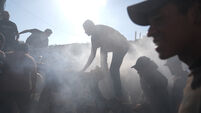
Israeli troops pulled back from two neighbourhoods in the sprawling Palestinian refugee camp of Rafah, leaving behind dozens of demolished and damaged homes, torn up roads and flattened cars.

Israeli army pulls back from smashed refugee camp

Israeli troops pulled back from two neighbourhoods in the sprawling Palestinian refugee camp of Rafah, leaving behind dozens of demolished and damaged homes, torn up roads and flattened cars.

Israel said its four-day military offensive, in search of arms-smuggling tunnels and militants, will continue – even though security officials said only one tunnel was uncovered and it is believed many fugitives fled the camp before the army moved in.

Officials said at least 43 homes were demolished and dozens more damaged in the camp since the offensive began on Tuesday. Forty Palestinians had been killed, including gunmen and eight demonstrators hit by a tank shell.

In the Brazil neighbourhood, 25 houses were razed and streets were torn up, local officials said. In many cases, the facades of houses caved in or were shorn off, apparently damage from wide armoured vehicles moving through the narrow alleys.

Israeli troops left behind leaflets in Arabic, urging residents not to give shelter to armed men “who are using your homes and are hiding inside like rats”.

Reporters were still unable to get into the hardest-hit neighbourhood, Tel Sultan, home to 25,000 people today.

However, local officials said 10 homes were demolished there, and more damaged. Resident Fathi Abdel-Al, speaking by telephone, said he saw smouldering and charred cars, toppled electricity poles and sewage running in the streets.

Abdel Rahim Abu Jazer, 42, a teacher, searched for food and water for his children. “I hardly recognised my own street,” he said. “I don’t think an earthquake could do what the Israeli army did to this area.”

Israeli security officials said the offensive would continue. A key objective remains the widening of an Israeli patrol road between Rafah and the Egyptian border, which would make it more difficult for weapons smugglers to dig tunnels.

The widening of the road would require the demolition of hundreds of Palestinian homes.

Israel’s vice premier, Ehud Olmert, assured US Secretary of State Colin Powell in a meeting in Washington earlier this week that the buffer zone would not be widened, US officials said.

However, Israeli security officials said today the army is still pushing for an expansion of the zone by at least yards.

More in this section

Cookie Policy Privacy Policy Brand Safety FAQ Help Contact Us Terms and Conditions

© Examiner Echo Group Limited