US troops launch attacks on cleric's militia
The US army intensified pressure on radical cleric Muqtada al-Sadr today, seizing the governor’s office from his fighters in the holy city of Najaf.
They also appointed a new governor for the region where his militia held sway.
An estimated 40 insurgents were killed in fighting outside of the Iraqi city, a US officer said.
In the past two days an estimated 76 militiamen loyal to al-Sadr have been killed in gun battles and raids.
“I think we are going to gain momentum from now on,” said Lieutenant Michael Watson, a platoon leader with the 2nd Armored Cavalry Regiment in Najaf.
Moderate Shiites tried to persuade al-Sadr to back away from his confrontation with the United States – a reflection of their growing concern.
The soldiers took control of the government office building in Najaf without a fight, but heavy gunfire was heard after they moved in and smoke rose over the city.
Motorists fled the area through deserted streets, honking their horns. Al-Sadr’s fighters had controlled the building since they launched their rebellion a month ago.
The governor’s office is less than three miles from the Shrine of Imam Ali, the holiest shrine in Shiite Islam.
Fighting also broke out east of the city, near the town of Kufa, and an estimated 40 militiamen were killed by US forces.
In Baghdad, chief US administrator Paul Bremer announced the appointment of the new governor for Najaf province, Adnan al-Zurufi, as part of the campaign to regain control from al-Sadr’s militia.
Bremer said al-Zurufi would take office immediately, replacing a governor who went to Iran and never returned.
US troops backed by tanks also attacked al-Sadr’s militiamen in Karbala, north of Najaf , the Arabic language television station Al-Jazeera reported.
Its correspondent in the city said explosions were heard in various parts of Karbala.
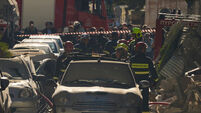
In Baghdad, a suicide attacker detonated a car bomb outside the Green Zone that houses the US headquarters in Baghdad, killing five Iraqi civilians and an American soldier.
Twenty-five people, including two American soldiers, were injured in the blast. The bomb, hidden inside an orange-and-white Baghdad taxi, exploded outside of a three-foot-high concrete blast wall which protects a US checkpoint. The suicide bomber also died in the attack, the military said.
The American soldier who died was the 21st US serviceman killed in Iraq in May.
The US command said that two US soldiers were killed and two were wounded when a roadside bomb exploded in Baghdad just before midnight on Wednesday.
The violence continued as special UN envoy Lakhdar Brahimi arrived in Baghdad for intensive discussions aimed at forming a transitional government to take power on June 30.
CONNECT WITH US TODAY



Be the first to know the latest news and updates