Spain: Al-Qaida claim overshadows election
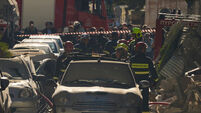
Spaniards went to the polls today in a general election thrown wide open by a reported al-Qaida claim that it staged the Madrid rail bombings to punish the government for supporting the Iraq war.
Ruling Popular Party candidate Mariano Rajoy led most polls until last Thursday’s bombing which killed 200 and injured 1,500 others.
His conservative party had been projected to win the most seats in the 350-member Congress of Deputies, and perhaps retain its outright majority.
Prime Minister Jose Maria Aznar’s government initially blamed the Basque separatist group ETA for the rail attack, even as evidence mounted of an Islamic link and the opposition accused the government of withholding information.
Then on Saturday night Interior Minister Angel Acebes announced the arrests of three Moroccans and two Indians and later disclosed the existence of a videotape in which a man speaking Arabic said Osama bin Laden’s al-Qaida terror group claimed responsibility for the rail blasts.
The videotape was recovered from a rubbish bin near a Madrid mosque, after an Arabic-speaking man called a Madrid TV station to say it was there, Acebes said.
“We declare our responsibility for what happened in Madrid,” said the man on the video, according to a government translation of the statement delivered in Arabic. “It is a response to your collaboration with the criminals Bush and his allies.”
The man noted that the bombings came exactly 2 1/2 years after the September 11, 2001, attacks in the United States.
The news was broadcast on national TV and could sway the election.
Spaniards including the main opposition candidate, Jose Luis Rodriguez Zapatero of the Socialist party, massively opposed last year’s U.S.-led invasion of Iraq, which Aznar endorsed. He later sent 1,300 peacekeeping troops.
Thousands of demonstrators gathered outside Popular Party headquarters in Madrid and other cities on Saturday night demanding the truth about who carried out the bombing, and also shouting criticism of the government.
“No more cover-ups,” read a banner carried by the protesters, who were being watched by riot police.
Interviews with some of the millions of Spaniards who rallied for peace across the country the day after the bombing showed they felt Aznar provoked the terrorist attack by endorsing the war.
The Socialists pointed to the government’s shifting version of events, which first focused blame ETA, but then included Islamic suspects after a van was found in the Madrid suburb where three of the four bombed trains originated. Inside were verses from the Quran, and detonators.
A Basque daily Sunday published a statement by ETA in which the group denied for a second time its involvement in the attacks.
The political campaign was bitter between Rajoy, 48, a veteran Cabinet minister under Aznar, and Rodriguez Zapatero, 43, a lawyer, member of parliament and his party’s general-secretary.
Rajoy refused to debate with the Socialist.
Before the attacks, polls gave Rajoy’s party a 3-5 percentage point lead over the Socialists in the race for the 350-seat Congress of Deputies. In the outgoing legislature, Aznar’s party had 183 seats.
Aznar did not seek re-election, complying with a pledge he made years ago to not seek a third, four-year term.
Asked how he thought the terrorist attack might sway voters, Rajoy said in an interview published on Saturday, “I don’t know. I hope not at all.”