Powell urges Red Cross to stay in Iraq
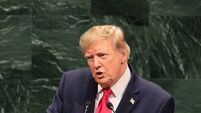
US Secretary of State Colin Powell urged the Red Cross and other relief organisations to stay in Iraq following a wave of suicide car bombings in Baghdad that killed around 40 people.
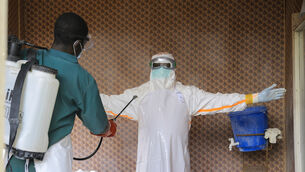
Shaken by the attack on its Baghdad offices yesterday, the International Committee of the Red Cross (ICRC) said that it may follow other groups in scaling back aid to the Iraqi people because of the danger.
But Mr Powell urged the Red Cross and other non-government organisations – as well as foreign contractors and the UN – to stay in Iraq.
“They are needed. Their work is needed. And if they are driven out, then the terrorists win,” Mr Powell said yesterday in Washington.
The German TV network ARD quoted the head of the ICRC delegation in Iraq as saying the evacuation of Red Cross personnel would begin today.
But Antonella Notari, chief spokeswoman at ICRC headquarters in Geneva, said late yesterday: “That’s not true. No decision has been taken yet.”
The agency said it will decide within days whether to reduce its presence in the country following the suicide car bombing that killed two Iraqi Red Cross employees and as many as 10 other people outside the compound.
“Such an attack is a major blow for us,” said Florian Westphal, an ICRC spokesman.
Other aid groups are evaluating their operations in Iraq after yesterday’s wave of attacks, which came more than two months after the August 19 bombing of the UN headquarters in Baghdad.
Medecins Sans Frontieres said it would reduce its seven-member expatriate team in the Iraqi capital but would continue operating clinics and supporting hospitals as much as possible.
The bombing of the Red Cross was an attack on “the symbolic heart of neutral assistance”, the Paris-based group said in a statement.
The Greek section of another aid group, Doctors of the World, which worked in Baghdad during US-led bombing raids, said it would probably remove at least two of its three staff.
The German government said it was considering whether to withdraw a four-member team of water-supply experts sent to Iraq in September, and the German organisation Help said its staff would stay in the office for a few days but would continue providing material aid and help clearing land mines.
“A complete withdrawal of humanitarian relief groups would only play into the hands of the terrorists and lead to a further radicalisation,” said Help spokesman Wolfgang Nierwetberg.
The World Bank and International Monetary Fund pulled out all their staff following the UN bombing.
The Red Cross has several hundred Iraqi employees supervised by 30-40 international staff, Mr Westphal said.
UN Secretary-General Kofi Annan spoke with ICRC President Jakob Kellenberger after the bombing and called the attack “a crime against humanity”.
Mr Annan’s spokeswoman, Marie Okabe, said: “The ICRC is a universally respected humanitarian organisation. Its neutrality and impartiality are the mainstays of its operations.”
Mr Westphal said the ICRC never requested protection from coalition forces, but had taken discreet steps to control direct access to its offices.
“At the same time it’s obviously also important that as a humanitarian organisation we don’t completely disappear behind impenetrable barriers,” he said.
UN agencies, which scaled back their operations following the August attack but continue to operate via locally hired staff, saw yesterday’s bombing as another assault on the very people who are providing aid to the Iraqis.
“It is always shocking to see that people like us – trying to help the Iraqi people – always seem to be one of the main targets,” said Damien Personnaz, spokesman for the UN Children’s Fund.
CONNECT WITH US TODAY



Be the first to know the latest news and updates