Bosnian Serbs get six months to reveal truth
Paddy Ashdown, Bosnia’s top international official, gave a six-month deadline to the Bosnian Serb authorities to reveal the fate of thousands of Muslims still missing after the 1995 Srebrenica massacre.
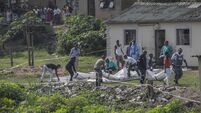
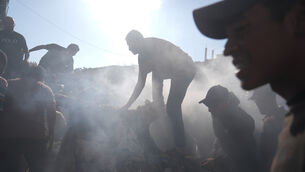
Up to 8,000 Muslim men and boys were killed by Bosnian Serb forces when they overran the Muslim enclave in the east of the country at the end of the 1992-95 war.
So far, 5,000 victims have been located in mass graves. But the fate of the others is still unknown.
The process of revealing the fate of the missing “is taking far too long,” said Ashdown, Bosnia’s top international administrator.
“It is simply unacceptable that getting the truth from the (Bosnian Serb) government is like extracting rotten teeth,” he said.
The victims’ families sued the Bosnian Serb authorities in front of the Human Right’s Chamber, the country’s highest court for human rights, demanding compensation as well as the truth about the destiny of their loved ones and who was responsible.
In March, the court ordered the Bosnian Serbs to submit a report that would answer families’ questions.
The Bosnian Serb authorities came up with an interim report, which was rejected by the court and described by international officials in Bosnia as a disgrace. It minimised the number of victims and hinted that the victims had likely killed each other.
The final report was then submitted to the Human Rights Chamber in September, offering a “marked change of tone,” compared to the previous one, which “was a disgraceful whitewash,” Ashdown said.
However, it does not represent a “change in substance,” he said.
Ashdown ordered that a new commission be formed to include a representative of the victims’ families, an international expert and a representative of the UN war crimes tribunal in The Hague.
He gave the new commission six months to produce answers, saying enough time has already been wasted.
The Bosnian Serb army, police and intelligence service must provide unconditional cooperation with the commission, Ashdown said.
If they don’t, “that would be a matter of the gravest legal consequences which would require firm and immediate actions,” he said.
According to Bosnia’s peace agreement, signed in 1995, Ashdown has the power to impose laws or remove officials as high as presidents if they do not comply with the accords.

CONNECT WITH US TODAY



Be the first to know the latest news and updates