I'll fight to the last man, vows Liberian leader
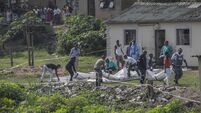
Gunmen spread out on rooftops as government and rebel fighters in shorts and flip-flops traded grenade and machine-gun fire in an all-out battle for Liberia’s war-ravaged capital.
With promised peacekeepers yet to arrive, warlord-turned-president Charles Taylor has vowed to fight to the last man in Monrovia – his only remaining stronghold in the country founded more than 150 years ago by freed American slaves.
Taylor has pledged to resign and accept an offer of asylum in Nigeria – but only after peacekeepers arrive to ensure an orderly transition. In the meantime, US president George Bush is considering sending troops, although he has set Taylor’s departure as a condition.
Rebels pounded the city with mortars yesterday and pushed deeper into the northern suburbs before being repelled by government forces into the port area. The fighting sent a new wave of terrified residents fleeing with bundles of possessions balanced on their heads. The casualty toll was not clear, but hundreds were killed when rebels fighting to oust Taylor last penetrated the city in June.
Heavy fighting continued in the port area late into the night, military officials and residents said.
“We have been pushed to the wall,” defence minister Daniel Chea said, gunfire rattling in the background. “We made all the overtures of peace, and now we are fighting for our lives.”
In an interview with The Associated Press, Taylor said on Saturday that until peacekeepers arrived he would “fight to the last man” for his capital.
Government fighters made a stand yesterday at two bridges leading from the rebel-controlled port into the downtown area after putting up little resistance the day before. Snipers deployed on rooftops and fighters waged pitched battles in the streets.
Bands of fighters, some of them bare-chested, shot weapons over their heads as they ducked and dived across one of the bridges amid a barrage of incoming bullets.
By afternoon, government forces had pushed back across the bridges into the southern tip of Bushrod Island, Chea said. But rebels had gained control of a third bridge, moving into the northern suburb of New Georgia, from which they were poised to make a stab at downtown from the east.
In Washington, the US State Department called for an immediate ceasefire by all parties and a focus on continuing peace talks in Ghana aimed at setting up a unity government to oversee fresh elections.
“Liberia’s path to peace is through the multi-party peace talks,” State Department deputy spokesman Philip Reeker said.
“We also ask the leaders of west Africa to use their influence and leverage to prevent further violence, by controlling their borders and not allowing the flow of weapons into Liberia.”
General Abdulsalami Abubakar, the former Nigerian military ruler mediating peace negotiations in Ghana, also appealed yesterday for an end to the fighting.
Officials for the rebel movement Liberians United for Reconciliation and Democracy insisted they remained committed to the talks and were only trying to pressure Taylor to step down, as promised under the June ceasefire.
Taylor launched Liberia’s last civil war in 1989, emerging in 1996 as the country’s strongest warlord. He was elected president the following year, and now faces rebels who include former rivals from the earlier war.
A United Nations-backed tribunal has indicted him on war crimes for supporting Sierra Leone’s notoriously brutal rebels.
CONNECT WITH US TODAY



Be the first to know the latest news and updates