Teenager relives family's massacre
A Kosovo teenager, now living in Manchester, told a court today how she watched her family lined up against a wall and gunned down.
Saranda Bogojevci travelled to Belgrade to testify against a Serb policeman who she said is one of the men who shouted and jeered before opening fire on her relatives.
The 18-year-old ethnic Albanian and four of her cousins survived the massacre in Podujevo on March 28, 1999.
“I just lay on the ground, my eyes shut, pretending to be dead,” she told the court in a whisper.
Her testimony is expected to shed new light on one of the worst massacres of the Kosovo war.
Nineteen ethnic Albanians were killed.
Five children – Fatos, 17, Jehona, 15, Lirie, 13, and Genc, 10, and their cousin Saranda – are giving evidence.
Saranda testified in a quiet but calm voice, and cradled her paralysed and badly scarred left arm, which was mutilated by bullets that hit her during the Serb rampage. She was also shot in the leg and back.
She told the court how Serb paramilitaries stormed through the town where her extended family had sought shelter.
They were all strip searched by the gunmen and forced along the main street and into a back garden.
“They told us to hold our hands up in the air and leave our belongings outside the house,” Bogojevci said. A soldier found marbles in her six-year-old cousin’s pocket and hurled them on the ground.
“They were shouting, laughing and cursing us,” the teenager whispered.
The men then shot dead her uncle, another male relative and an aunt before spraying the whole group with automatic gunfire.
“They started shooting at us all. I was somewhere in the middle of the group and I slid against a wall before falling down,” she said.
“It felt like the bullets came from all over the place. No one else survived but us children.”
Sasa Cvjetan, a Serb policeman, denies charges that he was one of the killers. His lawyer has said the young witnesses may have become confused after seeing his client’s picture in the newspapers since the massacre.
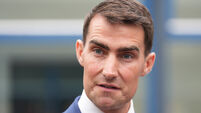
Throughout today’s testimony, Cvjetan – a huge, burly figure with a crew cut haircut – sat expressionless and never looked at Bogojevci.
After she finished, he said he wanted to “express regret” for her suffering.
But he said he objected to the charges against him and the way in which the children were taken to his prison cell to identify him,
“What you are doing here is ridiculous,” he told the court.
Serbs troops and paramilitaries cracked down on independence-minded ethnic Albanians in Kosovo under the regime of former Yugoslav President Slobodan Milosevic.
Milosevic is now on trial for war crimes and genocide at the UN tribunal in The Hague, Netherlands.
Bogojevci was asked by the judges if she would want compensation from Cvjetan if he is convicted. She replied: “If he did do it, I want him to answer for his crime to my family.”
“As for me personally, I am not asking for anything, nothing can bring my family back.”
Lynne Jones, a British psychologist who has worked with the children for the past four years, said their testimony has been “very therapeutic”.
“They feel much better for having been here,” Jones said. “The children have a sense that they want the truth to come out. What has really helped them is the knowledge of how important their testimony is.”
The children were found in a Kosovo hospital by British army doctors who evacuated them to the UK were they found sanctuary in Manchester.
CONNECT WITH US TODAY



Be the first to know the latest news and updates