Several feared dead in Algerian aftershock
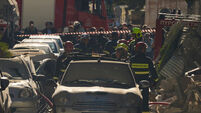
A strong aftershock rocked the quake-ravaged region east of Algiers, and at least three people were feared dead and more than 180 were injured, state radio said.
Yesterday’s aftershock measured 5.8 on the Richter Scale and was the strongest of several to hit the area since last Wednesday’s quake, Algerian geological officials told state radio.
At least one home collapsed in the quake-ravaged town of Boumerdes, state radio said. In one hotel in Algiers, panicked visitors ran out of the building.
Meanwhile, an Islamic party set up a camp for the homeless and handed out food and water, showing itself ready to fill the vacuum of aid distribution left by the government following the quake, which killed 2,218 people and injured more than 9,000 others.
Many residents have fled their homes and are living in the streets or in tents set up in parks out of fear of aftershocks.
Anger has mounted at what residents say is the slow government response to the devastating quake – and the ire has provided an opening for Muslim fundamentalists in a nation wracked by civil war since 1992 – 120,000 people have died in the fighting.
The El-Islah oua El-Irched, an aid group run by the moderate Islamic political party MSP, formerly known as Hamas, did not hide the fact that it was looking to attract supporters. Some residents objected to using their hardship for political gain.
Algeria’s Hamas party is separate from the militant Palestinian group of the same name.
The government has grown jittery about the potential political challenge posed by Muslim groups who excelled in providing aid – and winning gratitude – during the November 2001 flooding in Algiers that killed more than 700 people.
The government issued a warning on Monday against “irregular” collection and distribution of donations for quake victims. The government lumps such groups with Islamic insurgents it has been fighting.
Islah is a government recognised group and not legally a target of the warning, but it was clear the group is not shy about advertising itself as a political force.
In Tidjelabine, a town of 10,000 near the quake’s epicentre, Islah erected tents for 13 families whose homes were in ruins. Some workers wore aprons with their party name and logo displayed on the back.
“We want to take charge of families in this village for one or two years until they can be housed again,” said Ahmed Houlim, 40, a member of the Islah faction who was overseeing the building of toilets in the camp.
“We are much better organised than the state. When there are elections, local or presidential, there are candidates in our organisation and if people want to vote for them, they should.”
Just across from the camp, in a school courtyard, dozens of people lined up for biscuits, water and sugar at a distribution centre run by local authorities, who are under the control of the local mayor – a member of the ruling National Liberation Front.
Asked about the Islah activists, Rasaid Azem, 46, who manages the centre, said “they are doing it for political interest, that’s not good”.
He dismissed accusations that the authorities have done too little too late to help quake victims.
Tensions bubbled to the surface on Monday, when Interior Minister Yazid Noureddine Zerhouni was greeted during a visit to Bordj El Kiffan with cries of “police state, dictatorship” and “Leave. We don’t need you”, the newspaper Le Matin reported.
Witnesses said the minister apparently lost his temper and threatened to withhold aid if survivors rioted.
“He poked me in the chest and told me, ‘There will be neither tents nor any other kind of aid for you if you’re going to riot’,” said Abderrahmane Khodja, the head of a residents’ committee in an apartment complex that collapsed, leaving 150 families homeless.
Still, most quake victims said they didn’t care about politics, but just want tents, medicines, clean water and blankets.
“We are victims of an earthquake,” said Djamel Zidi, a 39-year-old teacher, his voice rising in anger. “We haven’t time for politics.”

CONNECT WITH US TODAY



Be the first to know the latest news and updates