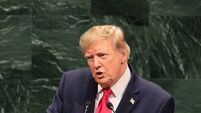
Bush backs plans for cyber-attack on Iraq
United States President George Bush has backed plans to launch a cyber-attack on Iraqi computer networks if war breaks out, it emerged today.
The President has signed a secret directive ordering the Government to develop guidelines to determine when and how to penetrate and disrupt enemy computer systems.
The Pentagon is believed to be considering using cyber-weapons to aid military action aimed at toppling Saddam Hussein.
“Whatever might happen in Iraq, you can be assured that all the appropriate approval mechanisms for cyber-operations would be followed,” an administration official told the Washington Post.
The US has never conducted a large-scale cyber-attack before, but military analysts believe it could dramatically reduce war causalities.
Invading foreign computer networks could enable the military to shut down radars and electrical plants, and to disrupt phone lines without firing a shot.
Mr Bush signed the National Security Directive last July but it has not been disclosed publicly until now.
“We have capabilities, we have organisations; we do not yet have an elaborated strategy, doctrine, procedures,” said Richard Clarke, the former presidential special adviser on cyberspace security.
But he warned that cyber-attacks shared many of the risks of conventional warfare, adding: “There are questions about collateral damage.”
A computer attack on an electric power grid, intended to pull the plug on military facilities, might end up turning off electricity to hospitals on the same network, he said.