Trump warns Republicans against move to stop him
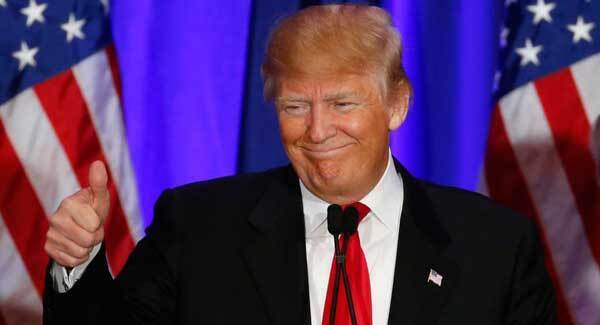
Math and momentum on his side, an emboldened Donald Trump offered himself as the inevitable Republican presidential nominee and called on Republican leaders to embrace the voters’ “tremendous fervour” for his candidacy. If Republican leaders try to deny him the nomination at a contested convention when he is leading the delegate count, Trump warned, “You’d have riots.”
Trump warns Republicans against move to stop him

Trump, who padded his delegate lead, predicted he’d amass enough support to snag the nomination outright before the Republican convention — without much difficulty, in fact — and added that “there’s going to be a tremendous problem” if the Republican establishment tries to oust him at the convention.

Democrat Hillary Clinton, eager for a November matchup against Trump, took direct aim at him after strengthening her position against rival Bernie Sanders with another batch of primary victories of her own.

“Our commander-in-chief has to be able to defend our country, not embarrass it,” Clinton said in a speech that largely ignored Sanders. “We can’t lose what made America great in the first place.”

With anti-Trump Republicans frantically seeking scenarios to deny the billionaire businessman the nomination, Trump suggested in a round of calls to morning TV shows that the party establishment already is starting to fall in line behind him.

Without naming names, Trump said some of the same Republican senators who are publicly running him down have called him privately to say they want to “become involved” in his campaign, eventually.

Trump, devoting little attention to his two remaining Republican rivals, was ready for a head-on fight with Clinton. He said she’d be “a major embarrassment for the country” and added that she “doesn’t have the strength or the stamina to be president.”

Clinton triumphed in the Florida, Illinois, Ohio and North Carolina presidential primaries, putting her in a commanding position. Trump strengthened his hand in the Republican race with wins in Florida, North Carolina, and Illinois but fell in Ohio to that state’s governor, John Kasich.

Kasich, celebrating his home state win over Trump, told NBC’s Today show, “I dealt him a very, very big blow to being able to have the number of delegates.” He added that neither Trump nor Texas Senator Cruz can win the general election.

But after Tuesday’s contests, it’s mathematically impossible for the Ohio governor to win a majority of delegates before the July national convention.

Even before Tuesday’s results, a group of conservatives was planning to meet to discuss ways to stop Trump, including a contested convention or rallying around a third-party candidate. While no such candidate has been identified, the participants in today’s meeting planned to discuss ballot access issues, including using an existing third party as a vehicle or an independent bid.

With Florida Senator Marco Rubio out of the race, Cruz welcomed the Florida senator’s supporters “with open arms.” The fiery conservative tried to cast the nomination battle as a two-person race between himself and Trump.

On the Democratic side, Clinton’s victories were blows to Sanders and bolstered her argument that she’s the best Democrat to take on the Republican nominee .

Clinton has at least 1,561 delegates, including the superdelegates who are elected officials and party leaders free to support the candidate of their choice. Sanders has at least 800. It takes 2,383 to win the Democratic nomination.

Trump’s Florida victory brought his delegate total to 621. Cruz has 396 and Kasich 138. Rubio left the race with 168.

More in this section

Cookie Policy Privacy Policy Brand Safety FAQ Help Contact Us Terms and Conditions

© Examiner Echo Group Limited