Austria plans to step up deportations of migrants
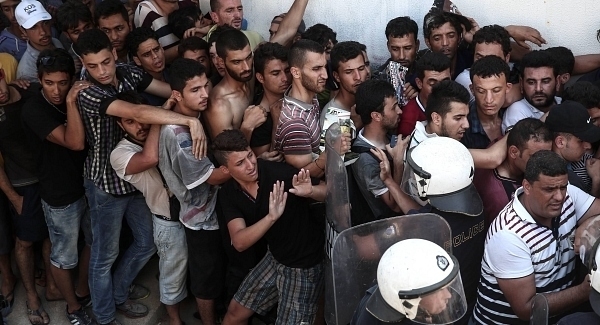
Austria and neighbouring Germany threw open their borders in September to hundreds of thousands of people who poured into Europe, many of them fleeing war and poverty in the Middle East, Afghanistan, and elsewhere.
Despite an initial outpouring of sympathy for the migrants, public concern about the influx has fuelled a rise in support for the far right in Austria, and opposition to the coalition government of Social Democrats and conservatives has grown.
In an apparent move to address those concerns, the government announced this month that it would cap the number of asylum claims at 127,500, or 1.5 percent of the country’s population, over the next four years.
Now the government has decided to carry out at least 50,000 deportations in the same period, according to a summary of an agreement between the interior, defence and integration ministries published on Sunday. It will also offer up to €450 to migrants whose asylum applications have been turned down if they agree to be deported, the summary said.
“We are already among the countries with the most deportations,” said interior minister Johanna Mikl-Leitner. “But we will increase the rate further.”
As a joint European solution to the crisis has faced opposition and delays, Vienna has increasingly said it will act alone to bring down the number of migrants reaching its border.
Facing similar pressures, senior German conservatives sought to reassure people, saying migrant numbers would have to go down and criminal refugees could be deported.
By adding new states to its list of “safe countries of origin”, Austria will be able to send people from those states back under an accelerated process, said Mikl-Leitner.
“We are declaring Morocco, Algeria and Tunisia safe countries of origin,” she said. The summary of the plan stated that Georgia, Mongolia and Ghana were also being added.
The country is also considering using its C-130 Hercules military transport aircraft for deportations.
Last year’s number of deportations was 8,365, compared with roughly 90,000 asylum claims.
CONNECT WITH US TODAY



Be the first to know the latest news and updates