TERROR ATTACKS: Brussels at standstill hoping the danger will pass
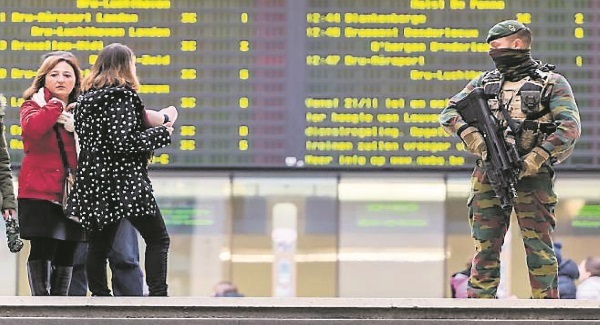
The streets around Gare de Midi are thronged with people on Sunday mornings buying vegetables, fruit, clothing. It’s known for big quantities and low prices.

TERROR ATTACKS: Brussels at standstill hoping the danger will pass

I prefer the market at Place Jordan — not too big, beautiful produce — French and Italian cheeses and meats, Belgian bread, wonderful flowers. It’s the site of the city’s best frites stall, and at this time of year they sell hot spiced wine and hand-made Christmas decorations.

But not yesterday. The triangular site not far from the European institutions was empty. The cafes and bars shut.

The occasional person out walking their dog, glancing sideways at the soldiers with their guns at the ready striding the streets.

This is the EU section of the city, here are the hotels where many of the national leaders stay when in the city for summits. Sometimes some walk the few hundred metres to the council, usually they travel with police outriders. Everyone today is taking the level four — the highest level of warning — seriously.

For Brussels to close her famous restaurants offering wild boar and berries at this time of year, the bars with their 450 different beers, the cinemas with Spectre showing, is indeed an event.

Most of the trams and buses were still running, but the metro, one line of which passes directly under the EU institutions, was shut.

The Grand Place that withstood every war for centuries is overlooked by balaclava-wearing snipers. To walk on the cobbles under the view finder of their guns is to feel a shiver of something not very nice, maybe fear.

The shopping streets are usually quiet on Sundays. But this feels different. The soldiers commandeer the streets, their boots echoing along the streets of shut shops. The police in their bullet-proof vests patrol, their holstered guns at the ready.

Brussels is a city of a myriad faces that change depending on the time of day, which end of the street you live, what language you speak, and where you work.

There are Dutch-speaking Flems and French-speaking Walloons who want their separate countries; German speakers in their little statelet; more than 5m Muslims in a country full of Catholic churches; many thousands passing through from every country in the globe, their work dependent on the business that is the EU.

At one end of my street is the dour offices of the Internal Market — the part of the EU that decides the rules on free trade, open borders for business. The windows are dark and you need a pass to get past security.

The other end is the commune of St Josse, a mixed neighbourhood with the large bosomed black ladies rubbing shoulders with well-covered Muslim women.

The Turkish shops are open every day of the week. Western Union and the ‘phone shops do brisk business. But not yesterday.

St Josse merges with Schaerbeek and becomes less Turkish and more Moroccan as it arks across the canal to Molenbeek, but all of them have parts where you feel like an interloper, where young men stand around, watching, taking an uncomfortable interest in strangers. The girls walk in threes, their long skirts trailing.

Now, at security level four, Brussels seems strangely united in this standstill time, waiting for the unknown danger to pass, to be reassured we are not under siege, that an attack is not imminent. That it is safe again.

To go out, to shop in the market, have a cappuccino in a cafe, take the metro to the park, not worry about sudden noises in the street.

More in this section

Cookie Policy Privacy Policy Brand Safety FAQ Help Contact Us Terms and Conditions

© Examiner Echo Group Limited