Solar storm stripping away Mars’ atmosphere
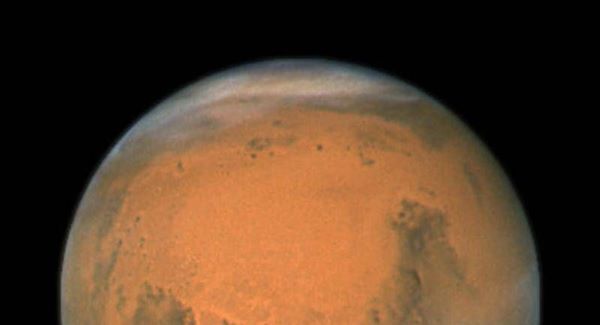
Unlike Earth, Mars does not have a magnetic field to protect its atmosphere, leaving it vulnerable to ultraviolet radiation and high-energy blasts of gas and magnetic particles from the sun.
On March 8, Nasa’s Mars-orbiting Maven spacecraft caught such a storm stripping away the planet’s atmosphere, according to a report published in this week’s issue of the journal Science.
The so-called “interplanetary coronal mass ejection” dramatically raised the number of oxygen and carbon dioxide ions spewing into space.
The storm was the largest of about a half-dozen similar events Maven has studied since arriving at the planet in September 2014.
The goal of the mission is to study what types of radiation are coming from the sun and cosmic sources and the impact on gases in Mars’ upper atmosphere.
The research will improve scientists’ understanding of how Mars evolved from a water-rich, warmer world, one that Nasa’s Curiosity rover mission has shown could have supported life, into the arid desert that exists today.
The first big-picture look from Maven stops short of assessing what happened to Mars’ water. Scientists say there are two options: Either it escaped into the atmosphere or it is locked in ice beneath the planet’s surface.