US willing to work with Russia, Iran on Syria
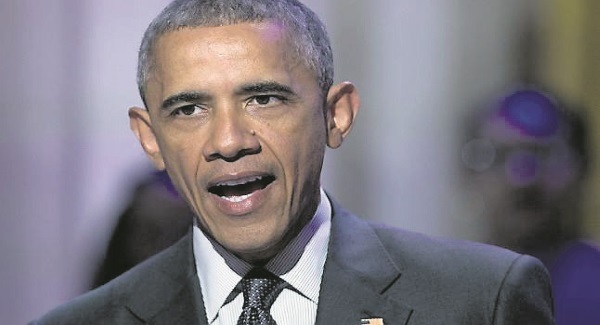
Syria cannot “return to the pre-war status quo,” Obama declared during his annual address to the United Nations General Assembly.
The president’s remarks underscore the tensions between the US and Russia, Assad’s strongest ally. Assad’s future was expected to be a top issue during a rare meeting late last night between Obama and Russian president Vladimir Putin.
The Russian president said it was a huge mistake not to co-operate with Syrian president Bashar al-Assad’s military.
“We think it is an enormous mistake to refuse to cooperate with the Syrian government and its armed forces who are valiantly fighting terrorism face to face,” Putin said.
“We should acknowledge that no one but President Assad’s armed forces and (Kurdish) militia are truly fighting the Islamic State and other terrorist organisations in Syria,” he said.
Obama rejected Putin’s continued support for Assad, saying that simply arguing that the “alternative is surely worse” is not a solution to a crisis that has killed more than 250,000 people since it began in 2011, led to a flood of refugees and created a vacuum for the Islamic State ad extremist groups.
Despite Obama’s opposition to Assad remaining in power, the US has struggled to energise a political process to push him from power. Russia has long been a major obstacle, shielding Assad from UN sanctions and continuing to provide the Syrian government with weapons.
In fact, Russia has appeared to deepen its support for Assad in recent weeks, sending additional military equipment and troops with the justification that it is helping the government fight the Islamic State.
Putin’s calls for strengthening Assad’s military come amid notable troubles for Obama’s plan to train and arm moderate rebels to fight the Islamic State in Syria. A $500m Pentagon training programme has resulted in just a handful of fighters to bolster airstrikes from a US-led coalition.
CONNECT WITH US TODAY



Be the first to know the latest news and updates