Greece faces ultimatum to pass reforms before new bailout considered
In an ultimatum, the government would have to virtually surrender its sovereignty to the European Commission who could veto ideas for laws before they were introduced to the Greek people or the parliament.
One diplomat described it as “using a steamroller”, while many others believed it was simply a method of forcing Greece to voluntarily “take time out” from the eurozone, since there is no legal basis for exit.
Earlier, ECB president Mario Draghi intervened at the eurozone finance ministers’ meeting, telling some of the ministers, including the Finns, that if they insisted on taking action against Greece, the ECB would not be able to step in to help.
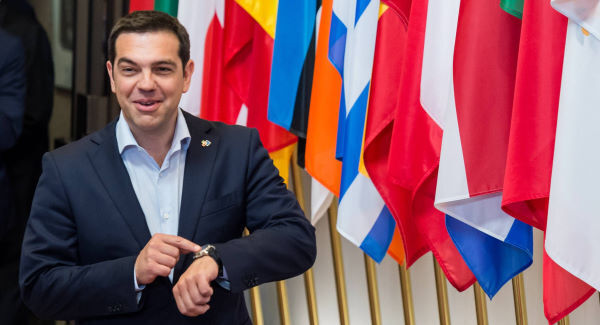
Greek prime minister Alexis Tsipras was under huge pressure with constant side-meetings with German chancellor Angela Merkel, French president Francoise Hollande and the head of the European Council, Donald Tusk.
Greek sources said Mr Tsipras was admitted to hospital during the week with a panic attack. He is also under pressure from the centre right European People’s Party, to which Ms Merkel’s party and Fine Gael belongs, to invite the centre-left To Potami party into his government.
Conditions he was asked to sign up to include:
- Pass new Vat measures in parliament by Wednesday;
- Make the pension system affordable;
- Overhaul the civil justice system;
- Ensure full legal independence of the Greek statistics office;
- Set up a Fiscal Council and quasi-automatic spending cuts if state budgets fail to have the surplus required.
All the changes must be agreed first with the troika.
Greece would have to agree to increase the amount of state assets to be privatised and either have the money raised invested by a body involving the commission, or put the ownership of Greek assets into the care of an investment institution set up last year in Luxembourg with the involvement of the German development bank, to be sold. Assets with a value of €50bn were previously mentioned.
The cost of the Greek civil service would have to be modernised and costs, according to a schedule agreed with the troika, reduced by July 20. They estimate the country’s financing needs that would include recapitalising the banks would be up to €86bn.
Seamus Coffey, economics lecturer in University College Cork said he believed that if Greece left the euro, the way was open for others to follow.
He added that there was no legal basis for Greece temporarily leaving the euro.