Drug clear for use in death penalty
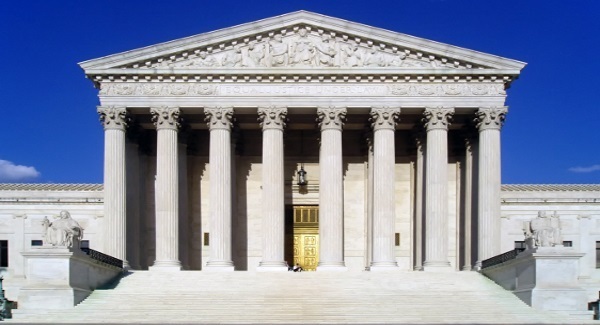
The US Supreme Court has upheld the use of a controversial drug in lethal-injection executions, even as two dissenting justices said for the first time they think it is “highly likely” that the death penalty itself is unconstitutional.

Drug clear for use in death penalty

Trading sharp words on their last day together until autumn, the justices voted 5-4 in a case from Oklahoma that the sedative midazolam can be used in executions without violating the Eighth Amendment prohibition on cruel and unusual punishment.

The drug was used in executions in Arizona, Ohio, and Oklahoma in 2014 that took longer than usual and raised concerns that it did not perform its intended task of putting inmates into a coma-like sleep.

The ruling has dealt a setback to opponents of the death penalty. The court handed a loss to three inmates who objected to the use of midazolam, saying it cannot achieve the level of unconsciousness required for surgery, making it unsuitable for executions.

Justice Samuel Alito said for a conservative majority that arguments that the drug could not be used effectively as a sedative in executions are speculative and dismissed problems in executions in Arizona and Oklahoma as “having little probative value for present purposes”.

In dissent, Justice Sonia Sotomayor said: “Under the court’s new rule, it would not matter whether the state intended to use midazolam or instead to have petitioners drawn and quartered, slowly tortured to death, or actually burned at the stake.”

Alito responded, saying: “The dissent’s resort to this outlandish rhetoric reveals the weakness of its legal arguments.”

In a separate dissent, Justice Stephen Breyer said the time has come for the court to debate whether the death penalty itself is constitutional. Justice Ruth Bader Ginsburg joined Breyer’s opinion.

“I believe it highly likely that the death penalty violates the Eighth Amendment,” Breyer said, drawing on the cases he has reviewed in more than 20 years on the Supreme Court bench.

More than 100 death row inmates have been exonerated, showing that the death penalty is unreliable, Breyer said. He said it also is imposed arbitrarily, takes far too long to carry out and has been abandoned by most of the country. Last year, just seven states carried out executions, he said.

Last April’s execution of Clayton Lockett was the first time Oklahoma used midazolam. Lockett writhed on the stretcher, moaned, and clenched his teeth for several minutes before prison officials tried to halt the process. Lockett died after 43 minutes.

Meanwhile, the court challenge has prompted Oklahoma to approve nitrogen gas as an alternative death penalty method if lethal injections are not possible, either because of a court ruling or a drug shortage.

More in this section

Cookie Policy Privacy Policy Brand Safety FAQ Help Contact Us Terms and Conditions

© Examiner Echo Group Limited