Summit row over migrant plans
The country’s prime minister, Victor Orban, has announced plans to build 4m-high wall on the border with Serbia, and is refusing to abide by the Dublin agreement that regulates the union’s asylum system.
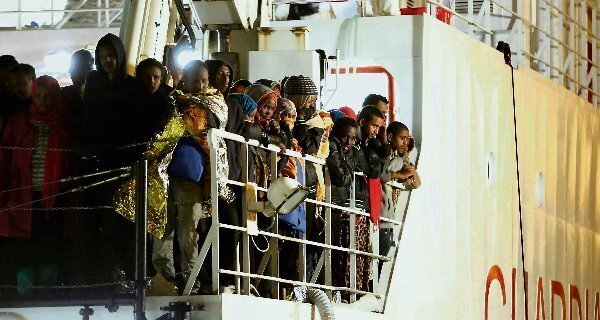
A raft of proposals, most of them aimed at stopping the influx of people from north Africa, will be discussed at today’s summit, with states set to reject proposals forcing them to take migrants from Greece and Italy.
Orban will argue that Hungary is receiving more migrants than these countries and does not have the facilities, funds or personnel to deal with them. He says the current proposals are unbalanced because they focus on helping Greece and Italy, where those setting sail from Libya are landing.
Hungary has the support of the Czech’s and the Slovaks, but Austria is threatening to close its border with Hungary because it is refusing to take back migrants that first entered the EU through Hungary.
Senior EU diplomats agree that since the beginning of this year, more asylum applications were made in Hungary than in Italy, “But this is not a reason to suspend the Dublin convention. A multiplication of unilateral measures is not the way forward and can be very damaging”.
Hungary’s EU ambassador, Peter Gyorkos, said in 2012 they had 2,500 asylum seekers but so far this year they have had more than 61,000 and they were registering 97% of them, including finger printing as required under EU rules.
Up to March most of them were from Kosovo but now the majority are from Afghanistan, Pakistan, and Iraq.
Part of the new proposals before the leaders today is to have a list of countries to which illegal migrants will be returned automatically. Kosovo is expected to be on this list, which EU diplomats say should reduce pressure on Hungary.
The numbers crossing EU borders last year increased by more than 300% to 320,000. While most of this reflected the war in Syria, a large proportion of those applying for refugee status came from Kosovo and a sizeable number from Ukraine.
To relieve pressure on Italy and Greece, the original commission plan was to make it mandatory for every EU country to take 40,000 Syrians and Eritreans from the two countries, with the number allocated according to a key taking account of population and wealth.
Around 13 countries, including Ireland, are against the mandatory element so the likely outcome will be it will be voluntary — but they will still try to relocate 40,000 over the next two years.
CONNECT WITH US TODAY



Be the first to know the latest news and updates