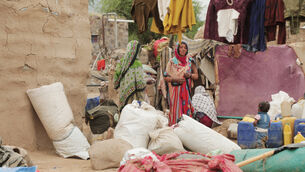
Health risk linked to climate change

But tackling climate change by cutting emissions from energy, transport and agriculture could provide a great global health opportunity, with benefits ranging from improved diets to fewer deaths and disease caused by air pollution.
Experts who contributed to The Lancet Commission on Health and Climate Change said funding to keep global temperatures from rising by more than 2°C, seen as a threshold above which the worst impacts are expected, was a good investment.
They called on governments to phase out coal-fired power plants and improve cities to promote healthy, greener lifestyles, making them better places to walk and cycle to cut pollution and obesity, and boosting insulation to cut energy use and cold-related deaths and disease.
Politicians should also bring in carbon pricing to push up the price of high carbon goods and services to make people change their behaviour, while reducing the cost of other taxes such as VAT, boosting investment or cutting the price of low-carbon technology.
This could mean the cost of flying going up, perhaps with a hike in air passenger duty for flights after the first flight a person takes in a year, pushing up the prices of the “short hop, short-term, leisure travel, stag-parties in Barcelona”.
Professor Paul Ekins, director of the Institute for Sustainable Resources, University College London, said: “That sort of thing could become quite a bit more expensive, such that people would think twice about doing that.”
People would have more money in their pockets from cuts to other taxes and if they “really valued those stag nights in Barcelona, they can still do it but they’d have to give up more in order to have it”, he suggested.
The health sector needed to take action too on clean energy, finding ways to deliver health services to patients without them having to drive to hospitals or switching asthma sufferers over to inhalers which do not use greenhouse gases, the commission said.
In a stark warning, the authors of the report published in the latest edition of The Lancet medical journal said the world was on track for 4°C of warming, with many times more people at risk from a rise in extreme weather events.
Rising global temperatures would see health hit through storms and floods.
Commission co-chairman Professor Anthony Costello, director of UCL’s Institute for Global Health, said: “On our current trajectory, going to 4°C is somewhere we don’t want to go, and that has very serious and potentially catastrophic effects for human health and human survival.
“It could undermine all the last half century gains.”
CONNECT WITH US TODAY



Be the first to know the latest news and updates