EU leaders look to strengthen sea patrols
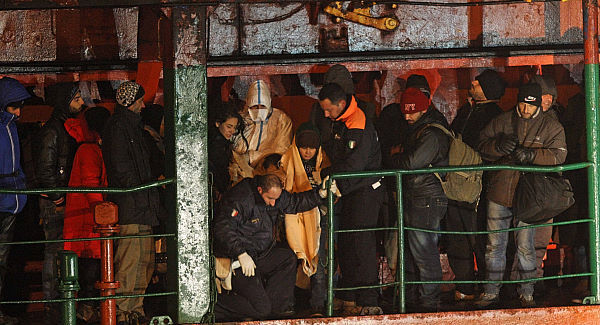
However, the search for solidarity among EU member states and the hope that they would agree to share the burden of the thousands of migrants that arrive in the front line countries has largely failed.
A pilot project being pushed by the European Commission where countries would agree to take a share of the asylum seekers that arrive mainly in Italy, Greece and Malta got a cool reception.
The Commission had proposed launching the pilot project with a figure of 10,000 migrants being distributed among all the EU’s countries, but France and others argued for half of this while Britain’s David Cameron made it clear he was not in favour.
Several countries, including Ireland, said they would contribute ships to patrol the Mediterranean. Taoiseach Enda Kenny said it would be part of a “search, rescue and humanitarian” mission. However, Cameron said his three vessels and helicopters would take any migrants found “to the nearest country, most likely Italy, and won’t have recourse to claim asylum in the UK”.
This would mean that the rest of the 570,820 asylum applicants last year would remain in temporary accommodation or would go through the current process that sees most of them applying for access to Sweden, Austria, Denmark and Germany.
Ireland ranked 17th among the EU countries for the number of asylum applicants last year. At 0.3 per 1,000 of the population, it was less than the EU average of 1.1 and well below the 7.8 registered by Sweden followed by 3.3 in Austria.
The other proposal from the European Commission — to triple to €9m the budget for the two Poseidon and Triton missions on coastguard duty in the Mediterranean — met with greater success.
However, it is a tiny sum compared to the €9m a month Italy paid out for its navy to set up a much more comprehensive mission, patrolling, and monitoring from a sophisticated satellite operation and rescuing and processing more than 170,000 during the year their Mare Nostrum project operated. It ended last October.
Many prime ministers concentrated on blaming the smugglers for the more than 1,500 deaths in the Mediterranean this year so far, and vowed to smash the smuggling rings at source — mainly Libya from whose shores 80% of the migrants come.
The Unhcr has registered a huge increase, of 44% to 570,820 migrants applying for asylum in Europe last year.
CONNECT WITH US TODAY



Be the first to know the latest news and updates