AirAsia bodies taken from sea still in seats
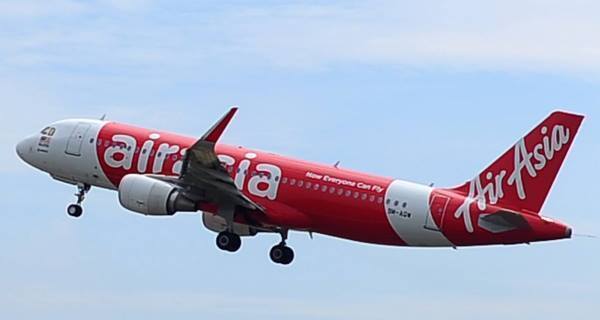
Of the 30 bodies recovered so far, 21 were found yesterday, many of them by a US Navy ship, according to officials.
The Airbus A320 carrying 162 passengers and crew went down last Sunday, halfway into a flight from Surabaya, Indonesia’s second-largest city, to Singapore.
Minutes before losing contact, the pilot told air traffic control he was approaching threatening clouds, but was denied permission to climb to a higher altitude because of heavy air traffic.
It remains unclear what caused the plane to plunge into the sea. The accident was AirAsia’s first since it began operations in 2001, quickly becoming one of the region’s most popular low-cost carriers.
In addition to looking for victims, Search and Rescue Agency chief Henry Bambang Soelistyo said ships from Indonesia, Malaysia, Singapore, and the US are scouring the ocean floor as they try to pinpoint wreckage and the plane’s black boxes.
The data recorder contains crucial information such as engine temperature and vertical and horizontal speed.
The voice recorder saves conversations between pilots and other sounds coming from the cockpit.
Toos Saniotoso, an Indonesian air safety investigator, said investigators “are looking at every aspect” as they try to determine why the plane crashed.
“From the operational side, the human factor, the technical side, the ATC [air traffic control] — everything is valuable to us,” he said.
Bad weather, which has hindered the search for the past several days, remained a worry. A drizzle and light clouds covered the area this morning, and rain, strong winds and high waves up to 13ft were forecast until tomorrow. Strong sea currents also kept debris moving.
That has severely slowed recovery efforts as bodies drift further away.
Colonel Yayan Sofiyan, commander of the warship Bung Tomo, told MetroTV his vessel pulled seven bodies from the choppy waters today, five still fastened in their seats.
Soelistyo, who was only able to confirm two victims in their seats, said a total of 30 bodies had been found.
More than a third have been pulled out by a US Navy ship, the USS Sampson.
Soelistyo pledged to recover the bodies of “our brothers and sisters... whatever conditions we face”.
Four crash victims have been identified and returned to their families, including a flight attendant and an 11-year-old boy.
The investigation into the crash has turned to the sea floor, with more sonar equipment and metal detectors deployed to scour the seabed for wreckage, including the plane’s black boxes.
Rescuers hope the fuselage, if intact, will contain the remains of many of those still missing. The wreckage will be key to explaining what might have caused Flight 8501 to go down.
“We will focus on underwater detection,” said Soelistyo.
He said bad weather, which has hindered the search for the past few days, remained a worry.
Nine planes, many with metal detecting equipment, were also scouring a 21,704 sq km area off Pangkalan Bun.
Two Japanese ships with three helicopters were on their way, Soelistyo said.
He estimated the fuselage was at a depth of about 25m to 30m.