Ebola vaccine plans to be speeded up for 2015
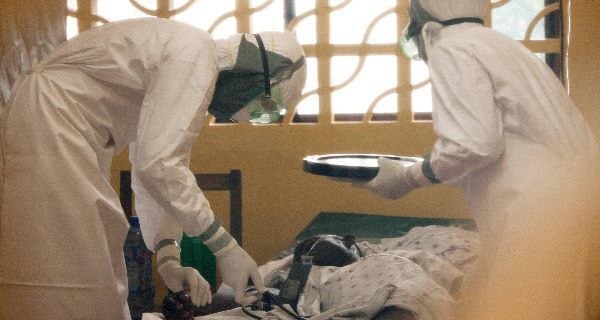
The World Health Organisation yesterday set out plans for speeding up development and deployment of experimental ebola vaccines, saying hundreds of thousands of doses should be ready for use in West Africa by the middle of 2015.

Ebola vaccine plans to be speeded up for 2015

The UN health agency confirmed that two leading vaccine candidates are in human clinical trials, and said another five experimental vaccines were also being developed and would begin clinical trials next year.

“Before the end of the first half of 2015... we could have available a few hundred thousand doses. That could be 200,000, it could be less or could be more,” the , the WHO’s assistant director general for health systems and innovation Marie-Paule Kieny told reporters after a meeting in Geneva of industry executives, global health experts, drug regulators, and funders.

Researchers are testing two candidate vaccines from GlaxoSmithKline and NewLink Genetics.

“At least five vaccines are following closely and will be in the clinic in the first months of 2015,” Kieny said. Among those is a potential shot from Johnson & Johnson, which is set to enter human trials in January.

Mali on Thursday became the sixth West African country to have a confirmed ebola case in the worst outbreak on record of the fever. The epidemic has killed almost 4,900 people, mostly in Liberia, Sierra Leone, and Guinea.

“Vaccines are not a magic bullet, but when ready they may be a good part of the effort to turn the tide against the epidemic,” said Kieny.

Experts aim to conduct a range of different clinical trials in Liberia, Sierra Leone, and Guinea to produce the first efficacy data by around April, she said. Plans are most advanced for Liberia, where two different ebola vaccines would be compared against a control, or placebo, vaccine.

Kieny said there was a lot of discussion about financing, with a number of entities including the World Bank and Médecins Sans Frontières making commitments to help fund ebola vaccine trials, distribution, and deployment.

Drugmakers also pledged to ensure any shots they do develop would be priced at an affordable level. “There is a broad understanding that money will not be an issue,” Kieny said, adding that “of course there is commitment for affordable prices”.

Drugmakers have said they are ready to work together to speed up the development and production of ebola vaccines.

If data from accelerated safety trials in human volunteers suggest they are safe to deploy, the plan is several thousand doses will be given to high-risk groups such as frontline health workers in Guinea, Sierra Leone, and Liberia by early next year.

Rolling out a mass immunisation programme would not happen until much later, when vaccine production has been ramped up.

GSK chief executive Andrew Witty said on Thursday that companies would need some kind of indemnity from governments or multilateral agencies for the widespread emergency use of vaccines in Africa, since the usual years-long process of safety testing has had to be shortened to a matter of months.

Kieny said the discussions on financing also included suggestions that a fund could be created to indemnify companies in case people had adverse reactions to the new ebola shots.

The facts

WHEN IS EBOLA CONTAGIOUS?

Only when someone is showing symptoms, which can start with vague indicators including a fever, flu-like body aches, and abdominal pain, and then vomiting and diarrhoea.

HOW DOES EBOLA SPREAD?

Through close contact with a symptomatic person’s bodily fluids, such as blood, sweat, vomit, faeces, urine, saliva, or semen. Those fluids must have an entry point, such as a cut or scrape or someone touching the nose, mouth, or eyes with contaminated hands, or being splashed.

The World Health Organisation says blood, faeces, and vomit are the most infectious fluids.

WHAT ABOUT MORE CASUAL CONTACT?

Ebola isn’t airborne. Tom Frieden, director of the Centers for Disease Control and Prevention, has said people do not get exposed by sitting next to someone.

“This is not like flu. It’s not like measles, not like the common cold. It’s not as spreadable, it’s not as infectious,” Frieden said.

CAN DOGS SPREAD IT?

No one knows. Authorities euthanised the pet dog of a Spanish nursing assistant who caught ebola while caring for a patient there. No case of ebola spreading between dogs and people has ever been documented. But at least one study suggests dogs may be able to get ebola without showing symptoms.

WHO GETS TESTED WHEN EBOLA IS SUSPECTED?

Hospitals with a suspected case call their health department or the CDC to go through a checklist to determine the person’s level of risk. Among the questions are whether the person reports a risky contact with a known ebola patient, how sick they are, and whether an alternative diagnosis is more likely.

HOW IS IT CLEANED UP?

The CDC says bleach and other hospital disinfectants kill ebola. Dried virus on surfaces survives only for several hours. Many US politicians have called for a ban on travel to and from Liberia, Sierra Leone, and Guinea — the West African countries most affected by the disease.

African immigrants victims of wave of hostility

Waves of paranoia about ebola in the US has left African immigrants feeling vulnerable and often the focus of treatment, writes Sharon Bernstein

When Zuru Pewu picked up her 4-year-old son Micah from kindergarten at a Staten Island, New York, public school recently, a woman pointed at her in front of about 30 parents and their children, and started shouting.

“She kept screaming: ‘These African bitches brought ebola into our country and are making everybody sick!’ ” said Pewu, 29, who emigrated from Liberia in 2005. “Then she told her son: ‘You know the country that’s called Liberia that they show on the TV? That’s where these bitches are from.’ ”

Pewu’s experience points to an alarming trend. While many Americans have reached out to help, African communities in the US are reporting an increasing number of incidents of ostracism.

Thursday’s news that a physician who had treated ebola patients in West Africa has tested positive for the disease in New York heightened anxieties even further.

Some Liberians, whose country has been hardest hit by the worst outbreak of the virus on record, say they are being shunned by friends and co-workers and fear losing their jobs.

In California, doctors refused to examine a child believed to have been in contact with someone who traveled to West Africa but turned out to have no risk of ebola, a nurses’ association said. In Rhode Island, two women said they were disinvited to a baby shower for a co-worker.

And in South Carolina, a high school student was sent home for 14 days because the student’s parent had visited Senegal, a country that has had one non-fatal case of ebola and was declared ebola-free last week, according to a school spokesman.

At least two speeches by Liberians have been cancelled by US universities, and a college in Texas refusedadmission to Nigerian students over worries about the virus even though that country has had few cases.

Oretha Bestman-Yates, a healthcare worker in New York, said she was barred from returning to her job after a trip to Liberia — despite 21 days of quarantine and no signs of illness.

“People are looking at Liberians as if we have ebola in our DNA,” said Ezekiel Solee, 55, a pastor in Rhode Island at a meeting in Providence to discuss the stigma. “Even when you hang your jacket, no one else wants to hang his jacket near you because they are afraid.”

This week, US president Barack Obama’s administration issued new guidelines for hospitals treating suspected ebola cases and ordered all travelers from Liberia, Sierra Leone, and Guinea — the West African countries most affected by the disease — to be funneled for screening through five selected airports.

Four people in the US have been diagnosed with ebola.

Many Republicans, joined by some Democrats, have called for a travel ban to the region. Conservative talk show host Rush Limbaugh linked the case of Thomas Duncan, a Liberian who died of ebola in Dallas, to illegal immigration, saying there was a “huge Liberian community of illegal immigrants in Dallas”.

Sociologist Barry Glassner, author of the book The Culture of Fear, said the combination of ebola fear and racial prejudice makes xenophobic reactions to dark-skinned people from West Africa even more likely.

“One has to wonder: If these were Swedes, would we be seeing the same response?” he asked.

Alexander Kollie, 43, president of the Liberian Ministerial Fellowship of Rhode Island, said he feels increasingly ostracised. “Because we are from Africa and our skin colour identifies us as being from Africa, we are being treated differently,” he said. “People avoid us, and they are afraid of us.”

However, fear of ebola also runs deep among West Africans. Several Liberian community associations in the US asked members to voluntarily quarantine themselves if they have travelled to the affected countries.

In Staten Island’s Little Liberia, where Pewu lives, streets bustle with men and women in bright traditional attire, loudly greeting each other in their native languages.

However, some have begun limiting their greetings to verbal salutes.

Tamba Aghailas, aged 42, a human resources specialist who recently travelled to Liberia, said so many people in the community were uncomfortable touching him when he returned that he stopped greeting acquaintances with a handshake.

Experts such as Mark Rupp, an infectious disease specialist at the Nebraska Medical Center in Omaha, which treated ebola-infected cameraman Ashoka Mukpo, urged the public to resist irrational fear of ebola, which is spread through contact with body fluids of someone who is showing symptoms.

New York on alert as first ebola victim treated

By Ellen Wulfhorst and Sebastien Malo New York

A doctor who worked in West Africa with ebola patients was in an isolation unit in New York City yesterday after testing positive for the virus, becoming the fourth person diagnosed with the disease in the US and the first in its largest city.

Craig Spencer, aged 33, was quarantined at Bellevue Hospital on Thursday, six days after returning from Guinea, unnerving financial markets amid concern the virus may spread in the city. The three previous cases were in Dallas.

Three people who had close contact with Spencer, a physician who volunteered for the humanitarian group Doctors Without Borders, were quarantined for observation. The doctor’s fiancée was quarantined at the same hospital, and all three were still healthy, officials said.

Meanwhile, Nina Pham, one of two nurses infected with ebola after treating the first patient diagnosed with the disease in the US, was declared virus-free.

The worst ebola outbreak on record has killed at least 4,877 people and perhaps as many as 15,000, mostly in Liberia, Sierra Leone, and Guinea, according to the World Health Organisation.

The WHO set out plans for speeding up development and deployment of experimental vaccines, saying hundreds of thousands of doses should be ready for use in West Africa by the middle of next year.

The Republican-led House Oversight and Government Reform Committee were holding a hearing yesterday to examine the Obama administration’s ebola response, featuring testimony from government officials, a nurse’s union representative and a humanitarian group working to control the outbreak in Africa.

New York City mayor Bill de Blasio and state Governor Andrew Cuomo sought to reassure New Yorkers they were safe, even though Spencer had ridden subways, taken a cab and visited a bowling alley between his return from Guinea and the onset of his symptoms.

“There is no reason for New Yorkers to be alarmed,” de Blasio said at a news conference at Bellevue Hospital.

Cuomo said that, unlike in Dallas, where the two hospital nurses treating Thomas Eric Duncan of Liberia contracted the disease, New York officials had time to thoroughly prepare and drill for the possibility of a case emerging in the city.

Four ebola cases have been diagnosed so far in the US: Duncan, who died on October 8 at Texas Health Presbyterian Hospital in Dallas; Texas Health Presbyterian nurses Pham; and Amber Vinson and Spencer.

US health officials said Pham was now virus-free.

EU pledges €1bn in campaign to fight ebola in West Africa

By Andrew Woodcock

EU leaders have pledged a total of €1bn to help fight the outbreak of killer disease ebola in West Africa.

The promises, at a European Council summit in Brussels, came after David Cameron threw down the gauntlet to fellow leaders in a letter last week, in which he warned them that failure to halt the virus at source would put Europe at risk.

The British prime minister — who on Thursday announced an extra £80m (€101m) in UK funding, bringing the total British contribution to £205m — welcomed the agreement.

“Over €1bn across Europe will be galvanised and spent on dealing with this issue,” he said. “I have been absolutely determined that Britain with other countries will lead the way in dealing with this.”

“Dealing with this because there is a massive crisis in west Africa and we should feel some moral obligation as a wealthy country to help.”

Britain has taken a leading role in tackling the epidemic in former colony Sierra Leone, while the US leads the international effort in neighbouring Liberia and France in Guinea.

Until the new announcement, the UK’s effort dwarfed those of most of its EU partners in terms of both cash and manpower — totalling more than the contributions of another 19 countries combined.

Ahead of this week’s summit, furniture store Ikea had outspent 18 EU member states — including Ireland, Spain, Luxembourg, and Poland — in support for the Ebola effort, with a donation of €5m.

Arriving at the summit, Cameron warned that the virus could spread to Europe if it was not stopped in its tracks in the African states where the deadly outbreak began earlier this year.

“It is very important we take action at source in west Africa,” said Cameron.

“Britain has been leading the way in terms of Sierra Leone and we have already pledged £125m, we have got military and other forces going to that country to help. But we need other countries to do more.”

A UK source suggested that the slowness of some European states to respond to the emergency might have been down to the absence of historical links to the area.

The World Health Organisation has reported a total of 9,936 cases of ebola, including 4,877 deaths, by October 19 — the vast majority of them in the three afflicted African countries.

Some £50m of the new UK money will go towards rolling out 200 ebola care units in areas of Sierra Leone, where individuals who fear they may have picked up the infection can be checked and put into isolation. Another £20m will go into the trust fund set up by UN secretary general Ban Ki-Moon, and £10m into support for burials of Ebola victims.

Experts have said that a key obstacle to eradicating the virus has been the unwillingness of relatives to give up the bodies of their loved ones without performing traditional burial rites, which increase the risk of spread.

Diane Sheard, UK director at the development campaign One welcomed the announcement that the EU has pledged €1bn to the fight against ebola.

More in this section

Cookie Policy Privacy Policy Brand Safety FAQ Help Contact Us Terms and Conditions

© Examiner Echo Group Limited