Britain poised to launch air strikes against IS targets
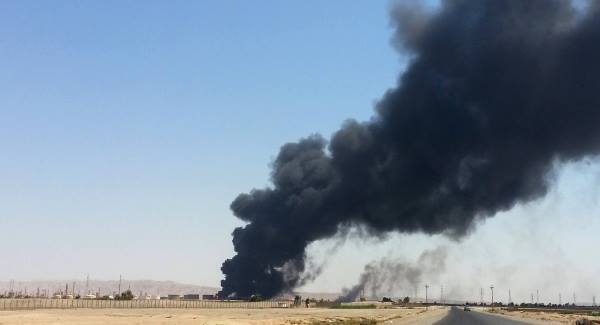
RAF planes could be called into action as early as today to carry out the strikes.
At the end of a Commons debate lasting six and a half hours, MPs voted by 524 to 43 — a majority of 481 — to endorse attacks on the militants in Iraq in support of the US-led coalition, with Labour backing the government motion.
The vote clears the way for RAF Tornado GR4 fighter bombers stationed in Cyprus to begin combat operations as soon as suitable targets are identified.
The prime minister David Cameron told MPs meeting in emergency session that Britain had a “duty” to join the military campaign as IS posed a direct threat to the country.
But despite the overwhelming majority in favour of military action, there were concerns on all sides that — 11 years after the invasion of Iraq — Britain was again embarking on military action in the Middle East.
At the same time, there was criticism from both Conservative and Labour MPs that UK air strikes were being restricted to Iraq and that IS targets in Syria — the movement’s birthplace — were excluded.
Mr Cameron said the motion had been limited to Iraq in order to secure cross-party consensus and avoid a repeat of last year’s damaging Commons defeat when Labour combined with Tory and Liberal Democrat rebels to block air strikes against the Syrian regime of president Bashar Assad.
However defence secretary Michael Fallon later indicated that the government may well eventually have to come back to the house to seek support for extending air strikes into Syria.
“Isil is based in Syria; that’s where its headquarters are; that’s where its resources, its people are. To deal with Isil you do have to deal and defeat them in both Iraq and in Syria,” he told BBC Radio 4.
“We are taking this in a calm, measured way, step by step, but it is clear to us that obviously Isil, in the end, has to be tackled on a broader front.”
The timing of the first RAF bombing raids will depend upon when suitable targets can be identified. The US has been carrying out air strikes in northern Iraq since mid-August and most of the obvious targets have already been hit.
The strikes are expected to be conducted by six Tornado GR4s which have been based in Cyprus since last month.
Mr Cameron told MPs Britain should not entirely “subcontract” to other countries’ air forces the task of defeating an organisation which had murdered a British hostage and plotted attacks against the UK.
“This is not a threat on the far side of the world,” he said. “Left unchecked, we will face a terrorist caliphate on the shores of the Mediterranean, bordering a Nato member, with a declared and proven determination to attack our country and our people.
“This is not the stuff of fantasy — it is happening in front of us and we need to face up to it.”
He said it would be a mission that would take “not just months but years”.
Belgium and Denmark also joined the US-led coalition of nations that are launching airstrikes on Islamic State group militants in Iraq, committing warplanes to the struggle against the extremists.
Belgium overwhelmingly approved the matter, voting 114 to 2 to take part, despite widespread concerns that more terrorism may follow as a result.
In May, Belgium was shaken when a gunman opened fire at a Jewish museum in Brussels, killing four people. The suspect arrested, French citizen Mehdi Nemouche, has been identified as a returning Islamic fighter from Syria, and leaders in Belgium and other European countries have expressed their fears that other returnees from Syria and Iraq may cause further havoc.
Danish prime minister Helle Thorning-Schmidt said her government would send four operational planes and three reserve jets along with 250 pilots and support staff. The deployment will last for 12 months. Lawmakers must also approve, but that is considered a formality.