BP most to blame for worst ever offshore oil spill, judge rules
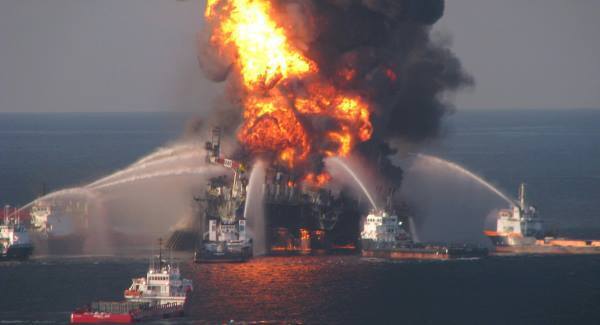
BP already has agreed to pay billions of dollars in criminal fines and compensation to people and businesses affected by the disaster.
But US District Judge Carl Barbier’s ruling could nearly quadruple what the UK company has to pay in civil fines for polluting the Gulf of Mexico during the 2010 spill.
Barbier presided over a trial in 2013 to apportion blame for the spill that leaked oil for 87 days in 2010. Eleven men died after the well blew.
The judge essentially divided blame among the three companies involved in the spill, ruling that BP bears 67% of the blame; Swiss-based drilling rig owner Transocean takes 30%; and US cement contractor Halliburton Energy Service takes 3%.
In his 153-page ruling, Barbier said BP made “profit-driven decisions” during the drilling of the well that led to the deadly blowout.
“These instances of negligence, taken together, evince an extreme deviation from the standard of care and a conscious disregard of known risks.”
BP said it would appeal the ruling, saying the company “believes that an impartial view of the record does not support the erroneous conclusion reached by the district court.”
The ruling means BP could face as much as $17.6bn (€13.6bn) in civil fines under the Clean Water Act, said David Uhlmann, a University of Michigan law professor and former chief of the Justice Department’s environmental crimes section.
“It also repudiates BP’s claims that it was merely negligent and will further damage BP’s already badly damaged reputation.”
The judge was assigned to oversee most of the federal litigation spawned by BP’s spill. Last year, he presided over two phases of a trial for claims against BP and its contractors brought by the federal government, the five Gulf states, and private lawyers representing businesses and residents.
Barbier heard eight weeks of testimony without a jury for the trial’s first phase, which was designed to identity the causes of the blowout of BP’s Macondo well and assign percentages of fault to the companies involved in the drilling project.
The judge heard three weeks of testimony for the second phase, which focused on duelling estimates of how much oil spilled into the Gulf and examined BP’s efforts to seal the well.
Millions of gallons of crude gushed into the Gulf after the well blew and triggered an explosion on the Deepwater Horizon drilling rig, killing wildlife, staining beaches and polluting marshes. BP ultimately sealed its well after several techniques failed to stop the gusher.
BP says it has spent more than $24bn in spill-related expenses, including cleanup costs and payments to businesses and residents who claim the spill cost them money. The company also has estimated that it will pay a total of $42bn to fully resolve its spill-related liability.
BP pleaded guilty in January 2013 to manslaughter charges for the rig workers’ deaths. BP also agreed to pay a record $4bn in penalties as part of its deal with the justice department, but the plea agreement didn’t resolve the federal government’s civil claims against BP.
Under the Clean Water Act, a polluter can be forced to pay a maximum of either $1,100 or $4,300 per barrel of spilled oil. The higher limit applies if the company is found grossly negligent — as BP was in Barbier’s ruling.
Government experts estimated that 4.2 million barrels, or 176 million gallons, spilled into the Gulf.

CONNECT WITH US TODAY



Be the first to know the latest news and updates