Nations urged to donate cash and resources to fight Ebola virus
Meanwhile, Nigeria’s president has declared a national state of emergency.
Goodluck Jonathan said in a statement that the relevant agencies must ensure all possible steps are taken “to effectively contain the threat of the ebola virus in line with international protocols and best practices”.
Nigeria’s health ministry said two patients in Africa’s most populous nation have died of the disease, and there are seven other confirmed cases.
The ebola outbreak is the largest and longest ever recorded for the disease, which has a death rate of about 50% and has so far killed at least 961 people, according to the UN health agency. It emerged in Guinea in March and has since spread to Sierra Leone and Liberia, with a suspected cluster in Nigeria.
“Countries affected to date simply do not have the capacity to manage an outbreak of this size and complexity on their own,” WHO chief Dr Margaret Chan said. “I urge the international community to provide this support on the most urgent basis possible.”
She said the world’s “collective health security” depends on curbing the spread of the killer virus in West Africa, even as she acknowledged that many countries would probably not have any ebola cases.
“Statements won’t save lives,” said Dr Bart Janssens, director of operations for Doctors Without Borders. “For weeks, [we] have been repeating that a massive medical, epidemiological, and public health response is desperately needed... Lives are being lost because the response is too slow.”
“I don’t know what the advantage is of declaring an international emergency,” added Dr David Heymann, who directed WHO’s response to the SARS outbreak. “This could bring in more foreign aid but we don’t know that yet.”
Earlier this week, the World Bank pledged up to €149m in emergency funding to help the countries affected by ebola and strengthen public health systems across West Africa.
Yesterday, the EU said it would give €8m to ebola efforts and send a second mobile lab to help with diagnostics. USAID said it would invest $12.45m to support the fight.
WHO said nations without ebola should heighten their surveillance and treat any suspected cases as a health emergency. This week, two of the worst-hit countries — Liberia and Sierra Leone — brought in troops to enforce quarantines and stop infected people from travelling.
Liberian authorities said nobody with a fever would be allowed in or out of the country and warned that some civil liberties could be suspended if needed.
Greece said it was running tests on a man suspected of carrying the virus. The Greek man, an architect who had recently travelled to Nigeria, was undergoing tests at an Athens hospital.
The disease spread from Liberia to Nigeria when a man apparently sick with ebola boarded a plane, according to the Nigerian government. It says the man, who later died, was not placed into isolation for at least 24 hours after he was hospitalised. A nurse who treated him has since died from ebola and authorities are monitoring seven people who had contact with him.
EBOLA: Questions and answers
By direct contact with an ebola patient’s blood or other bodily fluids such as urine, saliva, and sweat. The highest concentration of virus is thought to be in blood, vomit and diarrhoea.
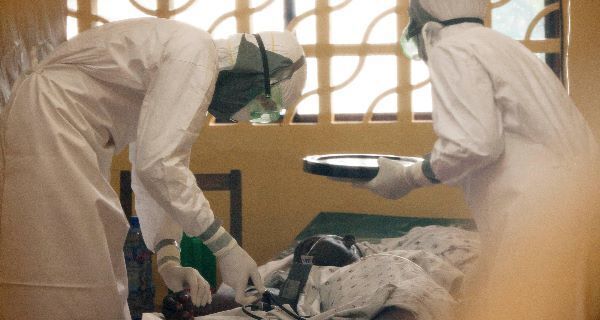
The most vulnerable people are health care workers and family members or others who care for the sick. Because of the deadly nature of the disease, health workers should wear protective gear, especially when handling things such as contaminated syringes. Such equipment is not commonly available in Africa, and the disease isn’t always quickly recognised. Symptoms are similar to malaria and cholera.
Someone can also get infected by handling soiled clothing or bed sheets without protection, then touching their nose, mouth or eyes. People can also catch the disease by eating infected bush meat, as ebola can sicken animals including bats, chimpanzees and antelopes. Scientists think fruit bats might be the source of the virus, but aren’t certain.
There is no evidence ebola can be spread in the air by sneezing or coughing. “If there was a role for airborne transmission, we’d be seeing a lot more cases and deaths by now,” said Ben Neuman, a virologist at Britain’s University of Reading.
Ebola is in some ways similar to the Aids virus as it is spread through bodily fluids, according to Stephen Morse, of Columbia University’s Mailman School of Public Health. Unlike those with HIV, those with the ebola virus are considered infectious only when they show symptoms, which include fever, vomiting, and diarrhoea.
Yes, by isolating anyone with symptoms while testing is done, taking precautions while giving them medical care and tracking down anyone they were in close contact with when they got sick. Those who have had direct contact with an ebola patient are advised to take their temperature twice a day for three weeks — the incubation period. If they show symptoms, they should then be isolated and tested.
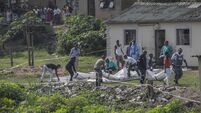
Ebola first appeared nearly 40 years ago. In past outbreaks, many cases have been linked to people burying their loved ones, involving ritual cleansing of the body and kissing the body.
“We know how to stop ebola,” said Gregory Hartl, a WHO spokesman. “We have stopped all previous outbreaks in the past using old-fashioned methods.”
“There isn’t any reason to think we can’t stop the outbreak in West Africa.”

CONNECT WITH US TODAY



Be the first to know the latest news and updates