Brussels Briefing
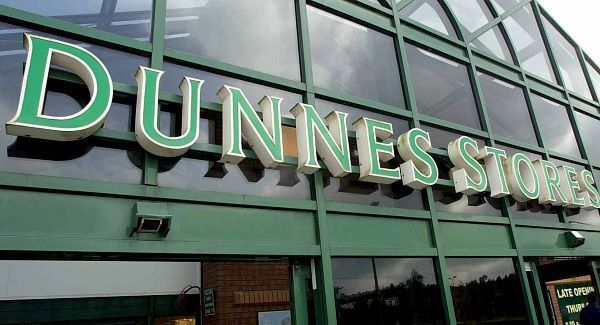
Expensive designer clothes could soon be available at a fraction of the price in Dunnes Stores — depending on what the judges in the European Court of Justice decides this week.
British fashion house Karen Millen has taken Dunnes Stores to court for stealing its design for a blouse.
Dunnes, which sold the striped blouse for €50, a third of what the originator was charging, doesn’t dispute it copied the design for the blouse as well as for a black knitted top.
Under EU laws, non-registered designs are protected for three years provided they are unique. Dunnes says the blouse was not unique and thus not protected by law.
Ireland has fewer than the average number of people in its jails in the EU, according to the latest report from the Council of Europe — the human rights body based in Strasbourg.
The country with the highest percentage of inmates is Lithuania, while Finland has the lowest. The largest number serving time in Ireland were convicted for drugs, followed by theft, assault and murder offences.
Each prisoner costs the state an average of €179 a day, rising to €967 for juveniles. The cost is lowest in Bulgaria at €3.12 a day, rising to €301 in Sweden,
Cryptic Enda had a field day after the unexpected, and hastily organised, visit from the Dutch prime minister Mark Rutte during the week.
When asked what they discussed, the Taoiseach said “flood defences”.
The flood was doubtless what would follow if Jean-Claude Juncker becomes president of the European Commission, with David Cameron threatening to pull the UK out of the EU.
And perhaps they want Mr Kenny to become the little boy with his finger in the dyke by agreeing to take the job himself.
He is after all a member of the same political group as Mr Juncker.
The visit followed the ‘summit in a boat’ between EU and EPP supremo, German chancellor Angela Merkel, and three non-EPP and quasi eurosceptic prime ministers, from the Netherlands, Britain and Sweden.
Europe rarely moves without a push from an impending crisis — and environmentalists are very happy so far with the push coming from Russia.
Shocked by the extent of EU member states’ reliance on gas, oil and coal from Russia, governments are now seriously considering every alternative.
Energy ministers turned their minds to increasing efficiency during the week when discussing their 2030 energy efficiency targets. This is also a winner for the climate and a producer of new green jobs, says a delighted Greenpeace. But now we can expect the fight-back from the fossil fuel lobby.
REAL ECONOMY: Prostitution and illegal drug sales being included as part of a country’s GDP have raised eyebrows.
Under international and EU rules going back more than a decade, they are supposed to be included irrespective of how difficult it is to get the sums right.
Just because they are illegal does not mean they are not part of a country’s real economy.
However, from September new rules will see research and military spending included as an investment rather an than expenditure — which will have a significant effect on many countries, not least Greece which is one of the highest spenders on military.
British prime minister David Cameron’s Conservative party said it would resume a stalled drive to make a referendum on Britain’s membership of the EU legally binding, a move designed to woo Eurosceptic voters and unite the party. Cameron cannot hold a referendum now as Liberal Democrats oppose his plan.
One of Ireland’s hopes for a speedy economic recovery rests on the European Central Bank (ECB) more or less forgetting that the Central Bank must sell on the bonds converted from the Anglo Irish promissory notes.
Recently, Mario Draghi sent a shot across the Irish bows saying they must sell and soon.
Last week, a senior EU source said they “like to make good on promises”. But there was a hint that selling off a little occasionally might be enough to ensure the ECB cannot be accused of monetary financing.
The banks as an agent of harm has not gone away — internal market commissioner Michel Barnier reminded US opinion makers on a visit to Washington during the week.
Just like in any other line of business, as the sector becomes more regulated, those who want more leeway look for loopholes. The Commissioner made proposals to deal with this in January that would see all securities lending and repo transactions reported to a central database — but this market does not stop at national borders which is why the US needs to become involved too, he said.
CONNECT WITH US TODAY



Be the first to know the latest news and updates