Race to produce 1,000mph car moves up a gear
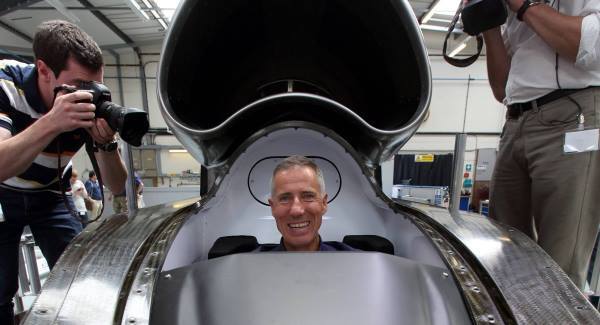
The mission to produce the world’s first 1,000mph car has taken a mammoth step forward as the cockpit of the supersonic vehicle, the Bloodhound, was unveiled.

Race to produce 1,000mph car moves up a gear

Bloodhound driver Andy Green, 51, is hoping to break the world land speed record with the £10m (€12.5m) rocket-powered car. The cockpit — a carbon fibre monocoque — has been tailored to the needs of Wing Commander Green, an RAF pilot.

It has been made from five different types of carbon fibre weave and two different resins and has taken more than 10,000 hours to design and manufacture.

Sandwiched between the layers of carbon fibre are three different thicknesses of aluminium honeycomb core — 8mm, 12mm and 20mm —which provide additional strength. At its thickest point, the monocoque comprises of 13 individual layers but is just 25mm in cross section.

The structure weighs 200kg and bolts directly to the metallic rear chassis carrying the jet, rocket and racing car engine.

The carbon front section will have to endure peak aerodynamic loads of up to three tonnes per square metre at 1,000mph (1,609kph) as well the considerable forces generated by the front wheels and suspension.

The roof of the cockpit has been designed to create a series of shockwaves to channel the air into the Eurojet EJ200 jet engine.

The pencil-shaped car is 44ft (13.4m) long, 6ft (183cm) in diameter and weighs 7.5 tonnes. In its ultimate form, it is expected to generate the combined output of 95 Formula 1 cars.

The cockpit is positioned in front of three incredibly loud motors — the jet, a cluster of hybrid rockets and the racing car engine that drives the rocket’s oxidiser pump and is expected to generate a noise level estimated at 140 decibels.

The team will be attempting to break the speed barrier in the South African desert in 2015 and 2016.

More in this section

Cookie Policy Privacy Policy Brand Safety FAQ Help Contact Us Terms and Conditions

© Examiner Echo Group Limited