‘Cultural icon’ Maya Angelou dies at 86
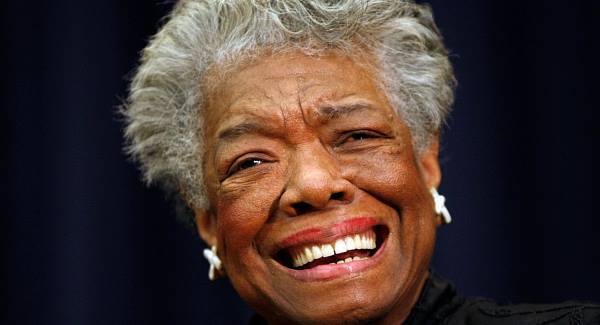
Maya Angelou was gratified, but not surprised by her extraordinary fortune.

‘Cultural icon’ Maya Angelou dies at 86

“I’m not modest,” she said last year. “Modesty is a learned behaviour. But I do pray for humility, because humility comes from the inside out.”

Her story awed millions. The young single mother who performed at strip clubs to earn a living later danced and sang on stages around the world. A black woman born poor wrote and recited the most popular presidential inaugural poem in history. A childhood victim of rape, shamed into silence, eventually told her story through one of the most widely read memoirs of the past few decades.

Angelou, a Renaissance woman and cultural pioneer, died yesterday at the age of 86.

She had served as a professor of American studies at the school since 1982. She had been set to appear this week at the Major League Baseball Beacon Awards Luncheon, but cancelled in recent days citing an unspecified illness.

Tall and regal, with a deep, majestic voice, she was unforgettable whether encountered through sight, sound or the printed word. She was an actress, singer and dancer in the 1950s and 1960s and broke through as an author in 1970 with “I Know Why the Caged Bird Sings,” which became standard (and occasionally censored) reading and made Angelou one of the first black women to enjoy mainstream success. “Caged Bird” was the start of a multipart autobiography that continued through the decades and captured a life of hopeless obscurity and triumphant fame.

The world was watching in 1993 when she read her cautiously hopeful “On the Pulse of the Morning” at US president Bill Clinton’s first inauguration. Her confident performance openly delighted Clinton and made publishing history by making a poem a best-seller, if not a critical favourite. For President George W Bush, she read another poem, Amazing Peace at the 2005 Christmas tree lighting ceremony at the White House. Presidents honoured her in return with a National Medal of Arts and the Presidential Medal of Freedom, the country’s highest civilian honour. In 2013, she received an honorary National Book Award.

She called herself a poet, in love with the “sound of language”, “the music in language.”

She was a mentor to Oprah Winfrey, whom she befriended when Winfrey was still a local television reporter, and often appeared on her friend’s talk show. She mastered several languages and published not just poetry, but advice books, cookbooks and children’s stories. She wrote music, plays and screenplays, received an Emmy nomination for her acting in Roots and never lost her passion for dance, the art she considered closest to poetry.

“The line of the dancer: If you watch (Mikhail) Baryshnikov and you see that line, that’s what the poet tries for. The poet tries for the line, the balance,” she said, shortly before her 80th birthday.

Her very name as an adult was a reinvention. Angelou was born Marguerite Johnson in St Louis and raised in Stamps, Arkansas, and San Francisco, moving back and forth between her parents and her grandmother.

She was smart and fresh but, at age 7, she was raped by her mother’s boyfriend and didn’t talk for years. She learned by reading, and listening. At age 9, she was writing poetry. By 17, she was a single mother. In her early 20s, she danced at a strip joint, ran a brothel, was married, and then divorced. But by her mid-20s, she was performing at the Purple Onion in San Francisco, where she shared billing with another future star, Phyllis Diller. She also spent a few days with Billie Holiday, who was kind enough to sing a lullaby to Angelou’s son, Guy, surly enough to heckle her off the stage and astute enough to tell her: “You’re going to be famous. But it won’t be for singing.”

After renaming herself Maya Angelou for the stage (“Maya” was a childhood nickname, “Angelou” a variation of her husband’s name), she toured in Porgy and Bess and Jean Genet’s The Blacks and danced with Alvin Ailey. She worked as a coordinator for the Southern Christian Leadership Council, and lived for years in Egypt and Ghana, where she met Nelson Mandela, a longtime friend; and Malcolm X, to whom she remained close until his assassination, in 1965. Three years later, she was helping King organise the Poor People’s March in Memphis, Tennessee, where the civil rights leader was slain on her 40th birthday.

Angelou was little known outside the theatrical community until “I Know Why the Caged Bird Sings,” and was mentioned to Random House editor Bob Loomis, who persuaded her to write a book.

Later in life Angelou’s passages about her rape and teen pregnancy have made it a perennial on the American Library Association’s list of works that draw complaints from parents and educators.

More in this section

Cookie Policy Privacy Policy Brand Safety FAQ Help Contact Us Terms and Conditions

© Examiner Echo Group Limited