Thailand awaits the fallout from latest coup
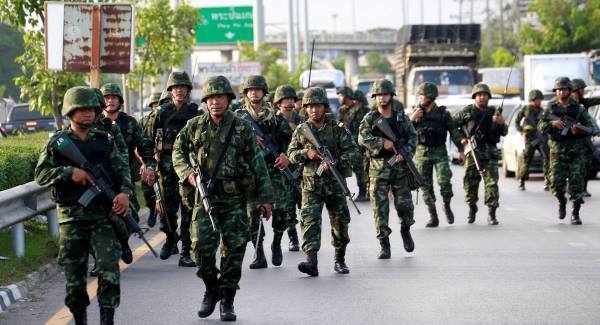
If Prayuth Chan-ocha’s decision to stage Thailand’s latest in a long list of coups was as impulsive as he suggests, then the general has a Herculean task managing the fallout and deciding what happens next.

Thailand awaits the fallout from latest coup

Seizing power in Thailand is one thing, running the country is another, and after overthrowing populist tycoon Thaksin Shinawatra’s political juggernaut for a second time in eight years, the generals should be prepared for a backlash.

The military top brass appeared to have been chastened by the experience of 2010, when a crackdown on Thaksin’s “red shirt” supporters ended in serious bloodshed.

They had repeatedly said since that the army would stay out of politics.

Now, by detaining senior politicians, declaring martial law, shutting down partisan media, and announcing curfews and bans on public gatherings, analysts say it has set the wheels in motion for a repressive crackdown to avert any new insurrection.

Thaksin was toppled by the army in 2006, after winning two landslide election victories with the support of the rural masses in the north and north- east.

The red shirts formed after that, and they have since grown in number and are increasingly organised, defiant, and militant in what they call a fight against a meddling military and a royalist establishment threatened by Thaksin’s rise.

They have long promised to fight back against any intervention to remove their governments and could launch a challenge to a junta that risks spiralling out of control.

The army says it was forced to launch the coup to bring peace to Thailand. But the men with guns may have shot themselves in the foot. “The coup in 2006 gave birth to the red shirts, so the military created a monster and it now has to deal with it,” said Pavin Chachavalpongpun of the Centre for South-east Asian Studies at Kyoto University.

“This, sadly, will end with another round of conflict.”

Most experts point to the irony of the generals intervening as a circuit-breaker in a polarising, often violent conflict, when they sided with a Bangkok oligarchy to topple Thaksin.

The junta has offered only vague hints about its next move. Few believe the military was naive enough to stage a putsch without first having a strategy in place if talks collapsed.

Prayuth has taken over the powers of prime minister, but it was not clear if he intended to hold on to the position. One possibility is that he appoints himself interim prime minister, with a rescue remit to reform and stabilise the country.

That’s seen as unlikely, however, as Prayuth could be out of his depth handling a yawning social divide, an economy in poor shape, and rival political factions with shadowy militant elements adept at carrying out bombings and drive-by shootings.

More palatable is that the Senate — Thailand’s only legislative arm functioning now — would appoint an interim prime minister to choose a cabinet, a process with a semblance of democracy that could soften the blow of the putsch.

x

More in this section

Cookie Policy Privacy Policy Brand Safety FAQ Help Contact Us Terms and Conditions

© Examiner Echo Group Limited