Islamists strike as rescue effort starts
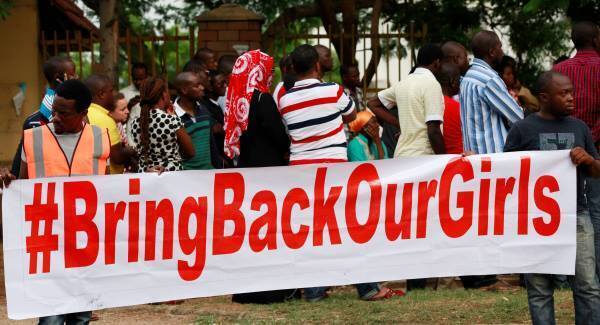
News of the attack came amid growing condemnation by Muslims in Nigeria and abroad against the Boko Haram terrorist network.
Meanwhile, one of the teenagers who escaped from Boko Haram’s grip said that the kidnapping was “too terrifying for words”, and that she is scared to go back to school.
Sarah Lawan, 19, said more girls could have escaped but they were frightened by threats to shoot them. She said the girls were driven in a truck for hours after the gunmen took them from their school in the pre-dawn hours of April 15 before the truck stopped. They were asked to get down and she and a friend bolted into the bushes.
Lawan is among 53 students who escaped, while 276 remain captive.
In Nigeria’s north-east war zone, local government chairman Abawu James Watharda said nobody could count the dead because 3,000 survivors fled Saturday night’s attack on the town of Liman Kara. Fleeing residents say the insurgents blew up the bridge that links the states of Adamawa and Borno, which are under a military state of emergency to halt the Islamic uprising.
French experts arrived in Nigeria yesterday to help look for the girls. Watharda said they are expert in collecting intelligence from technical and human sources and in image analysis.
British security experts arrived earlier to join US and Nigerian forces, and Britain said its aim is not only to help in the crisis over the girls but to defeat Boko Haram.
International outrage at the prolonged failure of Nigeria’s military to rescue the girls was joined by US first lady Michelle Obama, who said she and President Barack Obama are “outraged and heartbroken” over the mass abduction.
“In these girls, Barack and I see our own daughters,” she said, referring to Malia, 15, and Sasha, 12. “We see their hopes, their dreams, and we can only imagine the anguish their parents are feeling right now.”
One of the abductees’ parents, the Rev Enoch Mark, described his despair and anger at the military for not yet finding his two abducted daughters.
“For a good 11 days, our daughters were sitting in one place,” he said. “They camped them near Chibok [the town from which they were abducted], not more than 30km, and no help in hand. For a good 11 days.”
A well-known Islamic scholar, meanwhile, warned that having foreign soldiers on Nigerian soil could escalate the conflict and draw in foreign extremists. Ahmed Mahmud-Gumi said it “may trigger waves of terrorism never seen before”.
“Foreign terrorists are eager to engage foreign forces, making Nigeria just another battleground” like Afghan-istan and Iraq, he said.
The Socio-Economic Rights and Accountability Project said it is time to “act decisively”. The cost of inaction is “too high to contemplate”, it said.
The International Union for Muslim Scholars condemned “the terrible crimes offensive to Islam” and said the actions of Boko Haram “are very far from Islamic teachings”.
It called on Boko Haram to immediately release the girls, saying that threats to sell them into slavery are against Shariah law.

CONNECT WITH US TODAY



Be the first to know the latest news and updates










