Michelangelo’s David weak at the ankles and at risk of falling
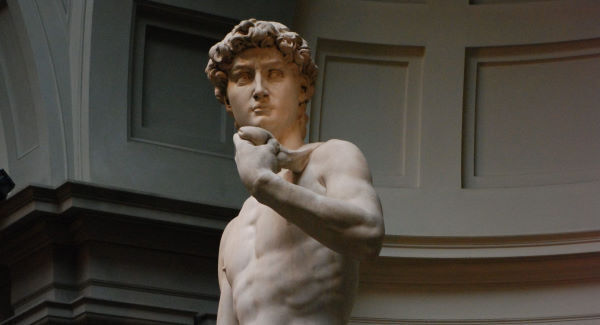
They believe the 4.34m tall statue of the naked boy-warrior is vulnerable because of its leaning pose and the poor quality marble used by Michelangelo.
David was completed by Michelangelo in 1504, more than 500 years ago, from a single block of marble.
It spent centuries outdoors battling the elements and suffered damage in a riot in 1527 and a protest by an Italian painter who smashed off a toe with a hammer in 1991.
The statue only recently underwent a year of restoration work and was unveiled in 2011 after restorers painstakingly cleaned off grime and sulphate deposits.
It was during this process the stress on the statue’s ankles was first noticed.
The National Research Council and Florence University carried out the tests on the statue
“Micro-fractures are visible in the left ankle and the carved tree stump (that bears some of David’s weight), threatening the stability of the sculpture,” the research council warned in a statement.
The statue stood for nearly four centuries outside Florence’s Palazzo Vecchio, but was moved into the Accademmia in 1873. Vibrations to the sculpture which attracts more than 1m visitors a year are also feared to be contributing to its vulnerability.
It is a star in the commercial world. David’s image has been reprinted on millions of fridge magnets, tea towels, and countless other souvenirs.
The statue also featured in an early episode of The Simpsons which dealt with censorship issues.
In July 2013, historical novelist Sarah Dunant told Radio National’s Books and Arts Daily programme that she would like to see David go into hiding.
“What I’d like to see is for the statue of Michelangelo’s David to disappear for a couple of hundred years, so it’s expunged from our consciousness and our popular references,” she said.
“So it can be found again — like the Statue of Liberty at the end of the Planet of the Apes — and seen again with a sense of awe.”

CONNECT WITH US TODAY



Be the first to know the latest news and updates