Major step towards vaccine for malaria
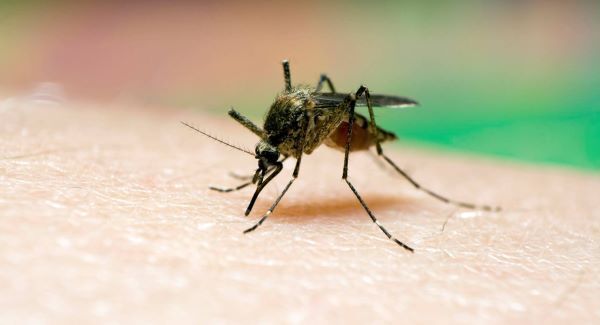
Major technological hurdles were overcome to produce the intravenous vaccine, made from whole cells of the malaria organism weakened by radiation.
Although the trial was small and designed to show a âproof of conceptâ, it could pave the way to the first vaccine capable of offering 100% protection against a scourge that claims 2,000 lives a day.
Malaria is caused by the single-celled Plasmodium parasite, which is spread by Anopheles mosquitoes. In 2010, an estimated 220m people around the world were bitten and infected, according to the World Health Organisation.
In that year malaria killed 660,000 victims, most of them children. By far the greatest number of casualties occur in sub-Saharan Africa due to infection by the deadliest form of the organism, Plasmodium falciparum (Pf).
Previous vaccines that use single surface proteins from the organism to trigger an immune reaction have proved disappointing.
In recent Phase III trials, the current leading candidate known as RTS,S protected only 31% of young infants and 56% of older babies and toddlers.
The new vaccine, known as PfSPZ, employs an old but more radical approach using whole Plasmodium falciparum sporozoites (SPZs), a mobile immature form of the parasite.
Research going back to the 1970s has shown that people bitten by mosquitoes carrying sporozoites weakened by radiation treatment become immunised against malaria.
But turning this idea into a practical solution has not been easy. The parasite had to be sufficiently weakened for an injectible vaccine, yet still be alive and active, and strict regulatory safeguards had to be met before such a treatment could be given to patients.
Results reported in the journal Science show that several jabs of the new whole sporozoite vaccine, given over a period of months, can provide total protection against malaria.
The US study involved 40 healthy adults aged 18 to 45 who received various doses of the vaccine, or were not vaccinated.
The PfSPZ vaccine was tested by allowing the volunteers to be bitten and infected by malaria-carrying mosquitoes under carefully controlled conditions. In all cases, treatment was eventually administered to rid them of the parasites.
All six volunteers given five doses of the new vaccine were fully protected against the infection, as were six of nine volunteers given four doses. Each shot contained 135,000 Plasmodium falciparum sporozoites.
The researchers, led by Dr Robert Seder, from the National Institute of Allergy and Infectious Diseases in Bethesda, Maryland, wrote: âThese data indicate there is a dose-dependent immunological threshold for establishing high-level protection against malaria that can be achieved by IV (intravenous) administration of a vaccine that is safe and meets regulatory standards.
Major obstacles have to be overcome before the vaccine can be produced and administered on a large scale.
First, the sporozoites have to be removed from the mosquitoesâ salivary glands. Sanaria, the US firm developing the vaccine employs 12 to 15 âdissectorsâ who each tease apart some 150 mosquitoes an hour.
The vaccine also has to be stored in liquid nitrogen, which might be difficult in developing countries.
Then there is the practical problem of administering several intravenous injections to very young children whose veins are not easy to find.