Egypt orders arrest of Muslim Brotherhood leaders
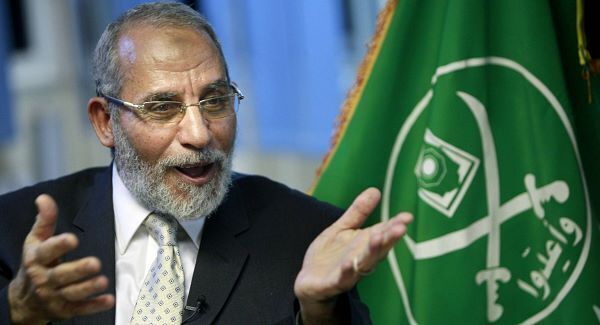
A week after the army toppled Egypt’s first democratically elected leader, bloodshed has opened deep fissures in the Arab world’s most populous country, with bitterness at levels unseen in its modern history.
Brotherhood spokesman Gehad El-Haddad said the announcement of charges against leader Mohamed Badie and several other senior figures was a bid by authorities to break up a vigil by thousands of Morsi supporters demanding his reinstatement.
This week’s unrest has alarmed Western donors and Israel, which has a 1979 peace treaty with Egypt. Washington, treading a careful line, has neither welcomed Morsi’s removal nor denounced it as a “coup”, which under US law would require it to halt aid including the $1.3 billion (€1bn) it gives the army each year.
The Brotherhood’s downfall has, however, been warmly welcomed by three of the rich Arab monarchies of the Gulf, who showered Cairo with aid to prop up the collapsing Egyptian economy. Kuwait promised Egypt $4bn in cash, loans and fuel yesterday, a day after Saudi Arabia pledged $5bn and United Arab Emirates offered $3bn.
The Brotherhood leaders were charged with inciting violence in Monday’s shootings, which began before dawn, when the Brotherhood says its followers were peacefully praying. The army says terrorists provoked the shooting by attacking its troops.
Haddad said the Brotherhood leaders had not been arrested and some were still attending the protest vigil at Rabaa Adawiya mosque. The charges against them were “nothing more than an attempt by the police state to dismantle the Rabaa protest”.
“What can we do? In a police state when the police force are criminals, the judiciary are traitors, and the investigators are the fabricators, what can one do?”
In addition to Badie, prosecutors ordered the arrest of others including his deputy, Mahmoud Ezzat, and outspoken party leaders Essam El-Erian and Mohamed El-Beltagi. Khairat El-Shater, another senior leader, was held last week.
The prosecutor also ordered 206 Brotherhood activists arrested after Monday’s violence to be detained for a further 15 days on accusations of involvement in the killings. It released 464 others who had been detained, on bail of about $300 each.
Egyptians have hoped the start of Ramadan, the Muslim fasting month, would cool passions, but it has been overshadowed by rancour. Thousands of Brotherhood supporters braved brutal summer heat to maintain their outdoor protest vigil despite the fast, clustering in tents to protect themselves from sun during daylight when Islam forbids eating food or drinking water.
Despite the violence that followed Morsi’s removal, the interim authorities are proceeding with the army’s “road map” to restore civilian rule. On Tuesday they named 76-year-old economist Hazem el-Beblawi as acting prime minister.
— Reuters
CONNECT WITH US TODAY



Be the first to know the latest news and updates