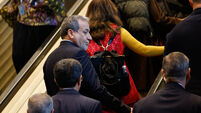
UN summit extends Kyoto Protocol to 2020
Many countries and environmentalists said the deal at the end of marathon two-week UN talks in Qatar would fail to slow rising temperatures or avert more floods, droughts, heat waves, and rising sea levels.
Environment ministers extended until 2020 the Kyoto Protocol, which obliges approximately 35 industrialised nations to cut their greenhouse gas emissions until the end of 2012. That keeps the pact alive as the sole legally binding climate plan.
But the 1997 treaty, 21 days away from expiry, has been sapped by the withdrawal of Russia, Japan, and Canada and its remaining backers, led by the EU and Australia, now account for just 15% of emissions.
âMuch, much more is needed if we are really going to address climate change and reduce emissions,â said Kieren Keke, foreign minister of Pacific island state Nauru, on behalf of the Alliance of Small Island States.
The European climate commissioner, Connie Hedegaard, said the deal would pave the way to talks on a new, global UN pact meant to be agreed in 2015 and enter into force in 2020. It will have emissions goals for all, including emerging nations led by China and India.
UN secretary-general Ban Ki-moon welcomed the deal but reckoned that âfar more needs to be done,â his spokesman said.
Environmentalists were unimpressed by the set of deals called the âDoha Climate Gatewayâ.
âThe UN climate talks failed to deliver increased cuts to carbon pollution, nor did they provide any credible pathway to $100bn [âŹ77.6bn] per year in finance by 2020 to help the poorest countries,â the Climate Action Network- International said.