Last-ditch pitches as $6bn battle draws to an end
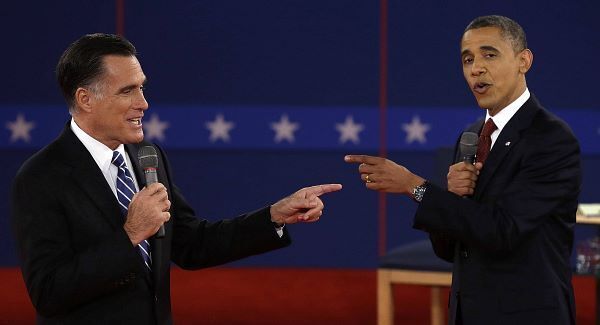
They stormed into the final day of their campaign, again visiting the toughest battleground state, Ohio, which has chosen the winner of the last 12 elections.
The candidates have attended hundreds of rallies, fundraisers and town halls, spent billions on attack ads, ground games, and get-out the-vote efforts, and squared off in three intense debates.
Nationwide polls show the two locked in one of the closest presidential races in recent US history. It is also the most expensive.
But a majority of polls in the swing states — especially Ohio, Iowa, and Wisconsin — show Obama with a slight advantage. That gives him an easier path to the 270 electoral votes needed for victory. No Republican has won the White House without carrying Ohio, and it was possible Romney would make a last-minute visit to the state today.
Under the US system, the winner is not determined by the nationwide popular vote but in state-by-state contests, making nine states that do not consistently vote Republican nor Democratic extremely important in such a tight race. Winning a state gives Romney or Obama that state’s electoral votes, which are apportioned to states based on population and representation in Congress.
This year’s tight race raises the possibility of a replay of the chaotic 2000 election, when Republican George W Bush won the presidency with an electoral vote majority while Democrat Al Gore had a narrow lead in the nationwide popular vote.
Obama and Romney say this year’s winner will be determined by which of their campaigns can get the most supporters to the polls. Obama needs the support of blacks and Hispanics to counter Romney’s support among white men, but his campaign knows that the feeling of making history by electing America’s first black president that fired up the 2008 campaign has cooled.
Romney, who termed himself “severely conservative” during the Republican primary campaign, shifted sharply in recent weeks to appeal to the political centre. He continues to insist his experience as a businessman would help fix the still-weak US economy — a top issue with voters.
The final national NBC/Wall Street Journal Poll, released on Sunday, showed Obama with the support of 48% of likely voters, with Romney receiving 47%. Up for grabs are 83 electoral votes spread across Colorado, Florida, Ohio, New Hampshire, Virginia, and Wisconsin.
Of those, Republicans and Democrats alike say Obama seems in slightly better shape than Romney in Ohio and Wisconsin, while Romney appears to be performing slightly better or has pulled even in Virginia and Florida.
With Obama sustaining his lead in Ohio, Romney made a surprise, last- minute move in Pennsylvania. The state has voted Democratic in the last five presidential elections and has long been counted in the Obama column. The theme from the movie Rocky blared as he stepped to the podium in a Philadelphia suburb.
“The people of America understand we’re taking back the White House because we’re going to win Pennsylvania,” he said.
Obama’s campaign said Romney’s move in Pennsylvania showed the Republican’s desperation over his diminished chances in Ohio.
And the Obama campaign announced that former president Bill Clinton — Obama’s most powerful supporter — would make four campaign stops in Pennsylvania.
About 30m people have already cast ballots in 34 states and the District of Columbia, although none will be counted until today.
“I need you, Ohio,” Obama told a 20,000-strong crowd in Cincinnati, in a state for which both candidates are fighting tooth and nail. “And if you’re willing to work with me, and knock on some doors with me, if you’re willing to early vote for me, make some phone calls for me, turn out for me, we’ll win Ohio. We will win this election,” the president said.
Both men campaigned into the night, with Romney imploring his supporters to get out and vote in the handful of battleground states where the next president will be decided.


CONNECT WITH US TODAY



Be the first to know the latest news and updates