Romney wins debate, but can he take the race?
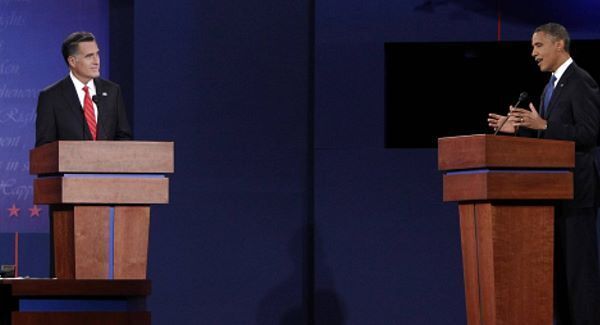
Romney could see a burst of fundraising, new interest from undecided voters, and a wave of support from his fellow Republicans after he emerged as a clear victor in his first face-to-face confrontation with Obama.
As James Carville, the top strategist in Bill Clinton’s 1992 presidential campaign, said on CNN: “President Obama came in, he wanted to have a conversation. It takes two people to have a conversation. Mitt Romney came in with a chainsaw.”
Now Romney will likely benefit from favourable news coverage as well.
Still, with the Nov 6 election little more than a month away, Romney is running out of time to seize the lead.
Voting has begun in 35 states, and 6% of those have already cast their ballots.
And while debates are among the most memorable events of any presidential campaign, there is little evidence they can change the outcome of an election.
Obama may have underwhelmed, but he avoided the sort of disastrous performance that can cause backers to reassess their support.
“Nobody is going to switch sides on the basis of this debate,” said Samuel Popkin, a political science professor at the University of California at San Diego.
Standing on the same stage as the president for the first time, Romney took full advantage of the chance to convince voters he is up to the task of leading the nation. Speaking in crisp, bullet-pointed paragraphs, he came armed with a quiver of “zingers” built for a long afterlife on television and YouTube.
“You’re entitled to your own house and your own airplane, but not your own facts,” Romney told Obama at one point.
Obama, by contrast, looked unhappy to be on stage. His answers were meandering — laden with facts but short on vision. He argued that Romney’s tax and budget plans don’t add up, but he steered clear of other lines of attack that have proven effective.
“Romney won. The real surprise is that he won so clearly,” said Paul Sracic, a political science professor at Youngstown State University.
Voters seemed to agree. Some 67% of those surveyed by CNN in a “flash poll” after the debate declared Romney the winner.
Obama’s re-election prospects on Intrade, an online prediction market, fell from 74% to 66%.
Obama maintains an advantage in opinion polls. On Wednesday, he led Romney by 47% to 41% in the daily Reuters/IPSOS tracking poll.
The night’s biggest mystery was why Obama did not bring up Romney’s embarrassing caught-on- tape moment from a ritzy fundraiser, in which he said “47%” of people in the US pay no income taxes, see themselves as victims and do not think they should “take personal responsibility and care for their lives”.
The video has undermined Romney’s bid for the presidency and gone to the heart of Obama’s case of how differently the two men see the role of government and the people it serves. It got at best an indirect nod during talk about Medicare and Social Security, both known as entitlements.
“You know, the name itself implies some sense of dependency on the part of these folks,” Obama said.
“These are folks who’ve worked hard, like my grandmother, and there are millions of people out there who are counting on this.” Obama’s campaign disputed the notion that the president missed an opportunity. They argue Romney’s own words, which the Obama campaign is using in television ads, are more effective.
The president’s biggest trouble seemed to be that he got caught up in exactly what he wanted to avoid — engaging Romney time and again on the challenger’s accusations instead of turning each answer into a clear, coherent argument about how he would help people over the next four years.
Over 67.2 million people watched the PBS Presidential debate between Barack Obama and Mitt Romney last night. #USElection2012 #lmedianews
— L Media News (@LMediaNews) October 4, 2012
It did not help that moderator Jim Lehrer lost control of the debate to the point that six segments got reduced to five, a sign of how long both men took to answer questions.
Ronmey began with the kind of here-is-how-this-affects-you empathy that has been missing from much of his campaign.
“Ann yesterday was at a rally in Denver,” Romney said of his wife. “And a woman came up to her with a baby in her arms, and said: ‘Ann, my husband has had four jobs in three years, part-time jobs. He’s lost his most recent job. And we’ve now just lost our home. Can you help us?’ And the answer is, yes, we can help, but it’s going to take a different path.”
What Obama wanted was to leave the American people with little doubt about his plans for the next four years and how they differ from Romney’s. It was a rare chance for him in this election year to reach millions of people directly, yet the debate’s jerky pace made it hard for him to break through.
Romney clearly had his lines ready and two more debates await. Still, Obama holds clear leads in most of the politically divided states likely to decide the race.
Many pollsters expect Obama’s margin to shrink somewhat over the coming month, but debates rarely have much of an impact.
Opinion polls have shifted by an average of less than 1% in the wake of the 16 presidential debates that have taken place since 1988, according to research by Tom Holbrook, a political science professor at theUniversity of Wisconsin.
The biggest shift came in 2004, when Democratic challenger John Kerry gained 2.3% points on Republican president George W Bush. Bush won the election.
People who have made up their minds to vote against Romney won’t change their minds no matter how presidential he looks in debates, said Popkin, author of The Candidate: What it Takes to Win — And Hold — the White House.
“If you think he’s a selfish person who’s out for the rich, you can still think he’s a confident, comfortable, genial executive who fires you with a smile,” he said.
And some voters may have been focusing on the words the two candidates said, rather than the manner in which they said them.
While Romney played down his conservative stance in a bid to reach out to centrist voters, Obama successfully emphasised themes like education and deficit reduction that appeal to this group, several observers said. His new emphasis on expanding opportunity, rather than ensuring fairness, also could help among the more ideologically moderate voters who have yet to make up their minds.
“Often voters are looking more for substance than for style,” said Dotty Lynch, professor of communication at the American University.
CONNECT WITH US TODAY



Be the first to know the latest news and updates