Scientists face trial over Italy’s killer quake
The seven defendants — six scientists and one government official — are accused of manslaughter in a case that some see as an unfair indictment of science.
Prosecutors say residents around the city of L’Aquila in the mountainous Abruzzo region should have been warned to flee their homes in the days before the quake.
“We simply want justice,” L’Aquila prosecutor Alfredo Rossini told reporters.
The injured parties are asking for €50 million in damages.
The defendants were members of a panel that had met six days before the quake to assess risks after hundreds of tremors had shaken the medieval university city.
At that meeting, a committee analysed data from the low-magnitude tremors and determined that the activity was not a prelude to a major earthquake.
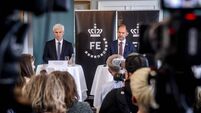
The only one of the seven defendants present at yesterday’s hearing was Bernardi De Bernardinis, a former senior official in the Civil Protection Agency.
The other defendants include top scientists like Enzo Boschi, the former director of Italy’s prestigious National Institute of Geophysics and Vulcanology, as well as Claudio Eva, a physics professor at Genoa University in northern Italy.
“This is a trial which opens on very shaky foundations. You cannot put science on trial,” Alfredo Biondi, Eva’s lawyer, told AFP.
The experts are accused of giving overly reassuring information to residents who could have taken adequate protective measures if they had been properly informed.
According to the indictment, the seven are suspected “of having provided an approximative, generic and ineffective assessment of seismic activity risks as well as incomplete, imprecise and contradictory information”.
In an open letter sent to Italian President Giorgio Napolitano, more than 5,000 scientists said the defendants essentially face criminal charges for failing to predict quakes, even though this remains technically impossible.
But Vincenzo Vittorini, a doctor who founded the association 309 Martyrs and lost his wife and daughter in the disaster, said: “I hope that this trial will change mindsets and will lead to greater attention given to communication on risks.”