Obama focuses on economy in key speech
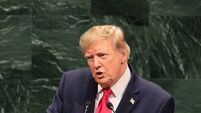
To a nationwide television audience, Obama homed in on jobs, the issue of most importance to the public and his hopes for a second term.
Specifically, he focused on improving the education, innovation and infrastructure of the US to provide a sounder economic base. He paired that with calls to reduce the government’s debt — now topping $14 trillion — and reform government. Those five areas framed the speech, with sprinklings of fresh proposals.
Yet no matter how ambitious Obama’s rhetorical reach, his speech at the halfway point of his presidential term will be viewed in the context of his new political reality.
The midterm elections gave Republicans control of the House and a stronger minority vote in the Senate, meaning he can’t push through changes over Republican objections. The contrast between the parties’ visions remains stark, and where to slash spending, and by how much, will drive much of the debate for the rest of 2011.
Obama’s speech came just hours after the House was to vote on setting spending for the rest of the year at 2008, pre-recession, levels. That resolution, largely symbolic, would put Republican lawmakers on record in favour of cutting $100 billion from Obama’s budget for the current year.
The president gave nods to US interests around the globe. But his primary goal for those watching was to emerge with more confidence about the economy of the country and more clarity about his vision for it.
The speech came less than three weeks after an assassination attempt on Democratic representative Gabrielle Giffords in Tucson, Arizona. She is recovering after being shot in the head during a one-man rampage that left six dead. Among those who sat with first lady Michelle Obama at the speech was the family of a nine-year-old girl who was killed, an aide to Giffords who rushed to help her at the shooting and trauma surgeons who have treated the wounded lawmaker.
Some Democratic and Republican lawmakers sat together at Obama’s speech.
The timing also meant that Obama was giving his main policy-driven speech of the year in the shadow of his own highly regarded eulogy for the Tucson victims, which served as a call for national unity and civility.
That only made delivering a successful speech last night more difficult, said Russell Riley, a presidential scholar at the University of Virginia. “If you want an important speech out of Barack Obama right now, he already gave it,” he said, referring to the Arizona memorial on January 12.
“What’s going to happen now with the State of the Union is part of the ongoing story of Washington, and it is a significant event in the political calendar. Yet from a historical perspective, they just tend not to make a difference.”
Obama is trying to emphasise economic priorities that can draw both public appeal and enough Republican consideration for at least serious debate.
He wrapped them all under the heading of helping the US to compete more successfully in the world — a “win the future” rallying cry Obama’s aides hopes will resonate with workers and business executives and bind the political parties.
Obama has spoken consistently about investing in energy, education, research and transportation. To Republicans, those are code words for more spending.
But senior adviser Valerie Jarrett said the administration believes it can embrace “targeted investment” in areas such as education and infrastructure, to create a business environment more conducive to job creation, while simultaneously backing budget cuts.
In a new poll, more than half of those surveyed disapproved of how Obama has handled the economy, and just 35% said it has improved on his watch. Still, the poll revealed a sense of perspective: Three-quarters of those questioned said it is unrealistic to expect noticeable improvements after two years.
The recession that began before Obama took office erased 7.3 million jobs. On the rebound, 1.1m jobs were produced last year. Yet unemployment, now at 9.4%, is likely to stay high.
CONNECT WITH US TODAY



Be the first to know the latest news and updates