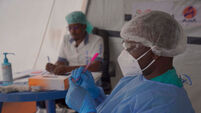
UN: Cholera may fester in Haiti for years
The disease that emerged last week in the first cases here for a century has killed 259 people.
Fear of the disease shot through the squalid tent camps where hundreds of thousands of refugees have been living since after the powerful January earthquake that devastated the Haitian capital.
Haitian officials note that there were only six deaths on Monday, and appeared confident that the outbreak is contained.
UN officials are however quickly tempering any optimism.
“A nationwide outbreak with tens of thousands of cases is a real possibility,” said a UN statement as aid agencies stepped up efforts to keep it out of the myriad camps that throng the capital Port-au-Prince.
Gabriel Thimote, director general of Haiti’s health department, said that the overall number of infections had risen from 3,115 to 3,342 over the past 24 hours, mainly along the Artibonite River north of the capital — thought to be the source of the epidemic.
Contamination of the Artibonite River, an artery crossing Haiti’s rural centre used by thousands, is believed to be the source of the epidemic.
The massive January earthquake that killed over 250,000 people also left 1.3 million more homeless in the desperately unsanitary tent cities.
The improvised living conditions find open pools of human waste near where the displaced bathe, do laundry and share meals in close quarters — ideal conditions for cholera, primarily passed through contaminated food and water, to thrive. The disease can fatally dehydrate the body in a matter of hours.
Jon Andrus, deputy director of Pan American Health Organisation (PAHO), the regional branch of the World Health Organisation (WHO), told reporters in Washington that the disease was likely to remain in Haiti for years to come.
“The surge of cases will come down but there will probably be cases in the future, now that the bacteria is well established in the environment,” he said.


CONNECT WITH US TODAY



Be the first to know the latest news and updates