Long, hot summer of fire and floods fits predictions

Charles J Hanley reports from New York on the troubling signs of climate change and efforts to cope

FLOODS, fires, melting ice and feverish heat: From smoke-choked Moscow to water-soaked Pakistan and the High Arctic, the planet seems to be having a summer breakdown. It’s not just a portent of things to come, scientists say, but a sign of troubling climate change already under way.

The weather-related cataclysms of July and August fit patterns predicted by climate scientists, the Geneva-based World Meteorological Organisation says — although those scientists always shy from tying individual disasters directly to global warming.

The experts now see an urgent need for better ways to forecast extreme events like Russia’s heat wave and wildfires and the record deluge devastating Pakistan. They’ll discuss such tools in meetings this month and next in Europe and America, under United Nations, US and British government sponsorship.

“There is no time to waste,” because societies must be equipped to deal with global warming, says British government climatologist Peter Stott.

He said modellers of climate systems are “very keen” to develop supercomputer modelling that would enable more detailed linking of cause and effect as a warming world shifts jet streams and other atmospheric currents now linked to the devastating Russian heatwave and Pakistan floods.

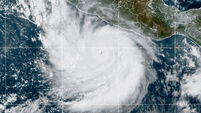
Those changes have wreaked weather havoc. The northern hemisphere jet stream, a fast-moving high-altitude air current, circles the earth from west to east. But in the past month, a “blocking event” has brought the jet stream to a halt, keeping weather patterns stationery over certain countries.

The UN’s network of climate scientists — the Intergovernmental Panel on Climate Change (IPCC) — has long predicted that rising global temperatures would produce more frequent and intense heat waves, and more intense rainfalls. In its latest assessment, in 2007, the Nobel Prize-winning panel went beyond that. It said these trends “have already been observed”, in an increase in heat waves since 1950, for example.

Still, climatologists generally refrain from blaming warming for this drought or that flood, since so many other factors also affect the day’s weather.

Stott and Nasa’s Gavin Schmidt at the Goddard Institute of Space Studies in New York, said it’s better to think in terms of odds: Warming might double the chances for a heat wave, for example. “That is exactly what’s happening,” Schmidt said, “a lot more warm extremes and less cold extremes.”

The WMO did point out, however, that this summer’s events fit the international scientists’ projections of “more frequent and more intense extreme weather events due to global warming”.

In fact, in key cases they’re a perfect fit:

RUSSIA

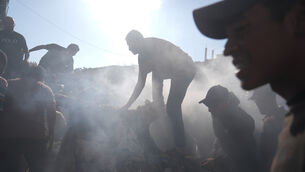
It’s been the hottest summer ever recorded in Russia, with Moscow temperatures topping 100F (37.8C) for the first time. The drought there has sparked hundreds of wildfires in forests and dried peat bogs, blanketing western Russia with a toxic smog. Moscow’s death rate has doubled to 700 people a day. City officials said morgues have been overflowing.

The drought reduced the wheat harvest by more than a third.

The 2007 IPCC report predicted a doubling of disastrous droughts in Russia this century and cited studies foreseeing catastrophic fires during dry years. It also said Russia would suffer large crop losses.

PAKISTAN

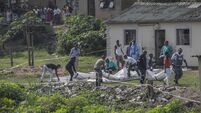
The heaviest monsoon rains on record — 12 inches in one 36-hour period — have left 14 million Pakistanis homeless or otherwise affected.

The UN believes 1,600 people have died in the floods, while Pakistan has confirmed 1,243 deaths.

The government calls it the worst natural disaster in the nation’s history.

A warmer atmosphere can hold — and discharge — more water. The 2007 IPCC report said rains have grown heavier for 40 years over north Pakistan and predicted greater flooding this century in south Asia’s monsoon region.

CHINA

China is witnessing its worst floods in decades, the WMO says, particularly in the north-west province of Gansu. There, floods and landslides last weekend killed at least 1,117 people and left more than 1,000 missing, feared swept away or buried beneath mud and debris.

The IPCC reported in 2007 rains had increased in north-west China by up to 33% since 1961, and floods nationwide increased sevenfold since the 1950s. It predicted still more frequent flooding this century.

ARCTIC

Researchers last week spotted a 260sq km chunk of ice calved off from the great Petermann Glacier in Greenland’s far north-west. It was the most massive ice island to break away in the Arctic in a half-century of observation.

The huge iceberg appeared just five months after an international scientific team published a report saying ice loss from the Greenland ice sheet is expanding up its north-west coast from the south.

Changes in the ice sheet “are happening fast, and we are definitely losing more ice mass than we had anticipated”, said one of the scientists, Nasa’s Isabella Velicogna.

In the Arctic Ocean itself, the summer melt of the vast ice cap has reached unprecedented proportions. Satellite data show the ocean area covered by ice last month was the second-lowest ever recorded for July.

The melting of land ice into the oceans is causing about 60% of the accelerating rise in sea levels worldwide, with thermal expansion from warming waters causing the rest.

The WMO’S World Climate Research Programme says seas are rising by 1.34 inches (3.4 millimetres) per decade, about twice the 20th century’s average.

Worldwide temperature readings, meanwhile, show that this January -June was the hottest first half of a year in 150 years of global climate record keeping. Meteorologists say 17 nations have recorded all-time-high temperatures in 2010, more than in any other year.

Scientists blame the warming on carbon dioxide and other heat-trapping gases pouring into the atmosphere from power plants, cars and trucks, furnaces and other fossil fuel-burning industrial and residential sources.

Experts are growing ever more vocal in urging sharp cutbacks in emissions, to protect the climate that has nurtured modern civilisation.

But not everyone is willing to act.

The US remains the only major industrialised nation not to have legislated caps on carbon emissions, after Senate Majority Leader Harry Reid last week withdrew climate legislation in the face of resistance from Republicans and some Democrats.

The US inaction, dating back to the 1990s, is a key reason global talks have bogged down for a pact to succeed the expiring Kyoto Protocol.

Governments around the world, especially in poorer nations that will be hard-hit, are scrambling to find ways and money to adapt to shifts in climate and rising seas.

The meetings of climatologists in the coming weeks in Paris, Britain and Colorado will be one step toward adaptation, seeking ways to identify trends in extreme events and better means of forecasting them.

A UN specialist in natural disasters says much more needs to be done.

Salvano Briceno of the UN’s International Strategy for Disaster Reduction pointed to aggravating factors in the latest climate catastrophes: China’s failure to stem deforestation, contributing to its deadly mudslides; Russia’s poor forest management, feeding fires; and the settling of poor Pakistanis on flood plains and dry riverbeds in the densely populated country, squatters’ turf that suddenly turned into torrents.

More in this section

Cookie Policy Privacy Policy Brand Safety FAQ Help Contact Us Terms and Conditions

© Examiner Echo Group Limited