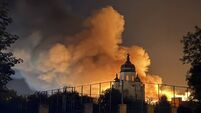
Moscow engulfed by thick smog from wildfires
Passengers on Moscow’s subway said the eye-stinging haze hovered above the platforms, and City Hall warned of health risks from the smoke, which is carrying harmful gases including carbon monoxide.
“I woke up before dawn and thought I was going to die of suffocation,” said Yadviga Pashkova, a frail, 62-year-old former schoolteacher who lives in central Moscow.
To the east, firefighters focused on beating flames back from a top-secret nuclear research facility. In the capital, President Dmitry Medvedev fired several high-ranking military officials over what he called criminal negligence in fires that ravaged a military base.
Russia is suffering through its worst heat wave on record, a condition that has sparked forest and peat fires across its central and western regions that have killed at least 48 people this week.
Over the last 24 hours, firefighters have extinguished 293 fires, but 403 others have been spotted and more than 500 others have continued to rage over large swathes of countryside, some out of control, the Emergencies Ministry said.
Dry winds have sent clouds of smog over Moscow before, but yesterday’s was the worst yet, with the haze obscuring the capital’s landmarks and penetrating the subway system.
Pollution indicators in the capital reached a “critical barrier” overnight and “even healthy people must take preventative measures,” Moscow weather officials said. Residents were urged to face masks outdoors.
Beer and bread prices may be set to rise as droughts in major wheat producing countries like Russia have led to spiralling global wheat costs.
The price of wheat recorded its highest monthly increase in nearly 40 years last month as a fifth of Russia’s wheat crops were destroyed. Russia is the third largest exporter of wheat in the world. As a result, global wheat costs have rocketed by around 50% since late June.
This could mean price hikes for essentials such as bread, pasta, biscuits and even beer. The cost of poultry may also be affected.
Warm conditions have also wiped some 10% of Britain’s wheat harvest as southern England and east Anglia experienced the driest January-June period since 1929.
Ireland imports 75,000 tonnes of flour a year from Britain, as wheat grown in Ireland is generally of lower quality and sold as animal feed.
Director of Retail Ireland Torlach Denihan said high wheat prices could effect the cost of certain goods here but also pointed out prices have dropped in the last 12 months.
CONNECT WITH US TODAY



Be the first to know the latest news and updates