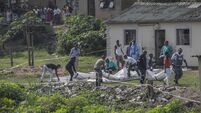
Brazil police killed 11,000 in 6 years, says rights group
Few officers have been charged over the extrajudicial killings, which are often labelled in Brazilian police reports as the deaths of suspects who resisted arrest, the report by Human Rights Watch said.
The declaration echoes a 2008 UN finding that police in Brazil were responsible for a “significant portion” of 48,000 killings the year before.
“Extrajudicial killing of criminal suspects is not the answer to violent crime,” said Jose Miguel Vivanco, Americas director at Human Rights Watch.
Isabel Figueiredo, Brazil’s co-ordinator-general of human rights and public safety, admitted police violence was a widespread problem and “it concerns the federal government a great deal”.
She said authorities had launched initiatives, including training police to respect human rights and the appropriate use of force, and buying less lethal weapons for state police forces.
Rio state public safety director Jose Beltrame, previously said critics did not recognise that his officers constantly confronted drug gangs and were armed with military rifles, grenades and anti-aircraft weapons.
The Human Rights Watch report examined 51 cases in Rio and Sao Paulo in which it seemed that police had killed an alleged criminal, but then reported that the victim died while resisting arrest.
In 33 cases, forensic evidence “was at odds with the official version of what took place” – including 17 cases in which autopsies indicated police shot the person at point-blank range, the report said, adding that “the 51 cases do not represent the totality of potential extrajudicial killings, but are indicative of a much broader problem”.