Khamenei: Election results will stand
Hundreds of people flocked to a central Tehran square, where police fired ammunition into the air and beat demonstrators protesting against the re-election of President Mahmoud Ahmadinejad. Some protesters fought back, media reports said. “The Islamic establishment and people will never give in to forceful demands in regard to the election,” Khamenei told lawmakers in Tehran, according to state television.
“The violation of the election will lead to dictatorship.” Khamenei’s remarks came after US president Barack Obama yesterday stepped up criticism of Iran’s crackdown on protesters, reacting to the violent confrontations between the government and opposition.
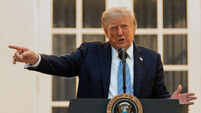
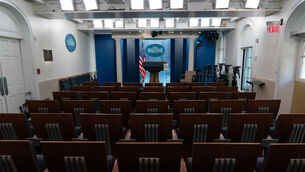
“The United States and the international community have been appalled and outraged by the threats, the beatings and imprisonments of the last few days,” Obama said at a White House news conference. “I strongly condemn these unjust actions.”
The government has banned opposition rallies, with security forces using water cannon, teargas and clubs to disperse crowds. Some 457 people were arrested in Tehran on June 20, state-run Press TV said. At least 17 people have been killed in protests since the election, according to the government. Farsi-language users of Facebook said on the social-networking website that a young woman was shot when riot police and militia tried to disperse protesters near parliament yesterday.
It wasn’t immediately possible to verify the entries on Facebook, which Iranians have increasingly relied on to find out about the crisis since the government shut down or hampered other forms of communication.
The planned demonstration near parliament was “independent” and unconnected to the campaign of Mir Hossein Mousavi, the main opponent in the presidential race, according to a statement on his website before the rally began.
“The law must be the last word in all issues,” Khamenei said. “If lawlessness prevails, then things will be difficult.”
The supreme leader warned against factionalism among lawmakers, who gathered at the complex that includes his residence and a mosque, and urged them to support Ahmadinejad’s administration. The Guardian Council, which oversees the country’s elections, yesterday ruled out an annulment of the election.
Obama said he’s waiting to see how the turmoil in Iran evolves before deciding how he might change his strategy of engaging the government there diplomatically to prevent the country from developing a nuclear weapon, which he called a “core national security interest” of the US.
Obama said “significant questions” cloud the election’s legitimacy. “Ultimately, the most important thing for the Iranian government to consider is legitimacy in the eyes of its own people, not in the eyes of the United States.”
Iran’s crackdown on protests is “obviously not encouraging” for any diplomatic breakthrough, he said. He also said the US and other nations aren’t interfering in Iran’s internal affairs.
Shirin Ebadi, an Iranian human rights activist who won the 2003 Nobel Peace Prize, told the British Broadcasting Corp’s Persian service in a Geneva interview yesterday that she had asked European Union officials in Brussels to downgrade relations with Iran. She said she urged them to adopt “political sanctions” to force Iran to stop violence against protesters.
The US, Britain and Israel have been the focus of the Iranian leadership’s most vehement accusations of meddling since the protests began. Interior Minister Sadegh Mahsouli said yesterday that demonstrators involved in unrest were financed by the US Central Intelligence Agency and the People’s Mujahedeen of Iran, an opposition group.
CONNECT WITH US TODAY



Be the first to know the latest news and updates