Thousands killed as Ethiopia routs Islamist fighters
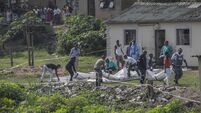
“We got reports of more than 3,000 wounded in a Mogadishu hospital. Those who died are well over 1,000,” Mr Meles said yesterday, two days after Ethiopia acknowledged military intervention in the neighbouring and lawless Horn of Africa.
The UN Security Council was set to hold an emergency meeting late last night on the conflict.
The 15-nation council was due to be briefed on the crisis by Secretary-General Kofi Annan’s special envoy for Somalia, Francois Lonseny Fall of Guinea, U.N. spokesman Farhan Haq said.
Meanwhile, the Islamists acknowledged that they had been forced to withdraw from many frontline positions but vowed to dig in for a long war with Ethiopia, which has denied intentions of taking the Islamist stronghold Mogadishu.
“Our forces and that of the transitional federal government have broken the back of the international terrorist forces around Baidoa and they are in full retreat now,” Mr Meles said in the wake of air strikes on Islamist targets and artillery battles on several fronts.
The weak transitional government holds only one major town, Baidoa, in the southern central region, while the Islamic Court Union forces in June seized the capital Mogadishu from warlords and then extended their control over south and central Somalia.
Government fighters began to advance on the powerful Islamist movement after Ethiopian warplanes bombed Mogadishu airport and other airfields held by the Islamists to cut supply lines.
“We are only 100 kilometres (60 miles) away from Mogadishu and are heading to it,” Somalia’s ambassador to Ethiopia, Abdelkarin Farah, told journalists in Addis Ababa.
Mr Meles, who said he had deployed between 3,000 to 4,000 troops, denied the Ethiopian forces planned to take Mogadishu or any other town. UN reports had said Addis Ababa deployed 8,000 troops, while its regional foe Eritrea sent 2,000 to back the Islamists.
“Liberating towns is not our agenda. Our troops have not entered any town,” the prime minister added.
Mainly Christian Ethiopia justified its intervention on the grounds that the Islamists represent a direct threat to its own security and sovereignty, and has aligned with Washington in linking their radical leaders with the al-Qaida network.
CONNECT WITH US TODAY



Be the first to know the latest news and updates