Triumph over terror
The wall plaque marking where Charles Dickens once lived and Blitz firefighters once died are testimonies to how it has witnessed this city’s heights of civilisation and depths of barbarism.
However, nothing could prepare the quiet Bloomsbury square for the moment it was suddenly flashed across TV screens around the globe as the bloody epicentre of London under attack.
While the terror on the three blown-apart tube trains could only be imagined, the wreckage of the No 30 red double-decker bus, decapitated and mangled along the square’s western edge, turned a cliche signature image of London’s brightness into a haunting reminder of its vulnerability.
Fate was equally kind and cruel to the passengers on the No 30 that morning. Many on board died because they thought it offered sanctuary as they were hurriedly evacuated away from the bomb-shattered underground system with central London collapsing into panic around them.
Many on the No 30 survived because, unknown to 18-year-old mass murderer Hasib Hussain, he had chosen to unleash the fatal power of his homemade device directly outside the headquarters of the British Medical Association in Tavistock Square, ensuring expert help would be amid the wreckage within seconds.
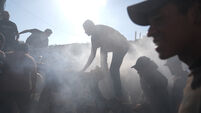
Those clambering through the red twisted metal, past dead and dying fellow commuters, were repeating a morbid journey already carried out three times across the city as survivors staggered from the tube carriages beneath London’s streets.
The square was flooded in sunshine as I reached its edge that afternoon. The crying and the bewildered clung to the side streets around, unable to leave its morbid pull and forbidden to enter as the emergency services attempted to cope with the scenes hidden from view.
Nearby, a blood-splattered silver foil emergency blanket was left hanging from railings, while an Olympic 2012 banner, trumpeting London’s surprise triumph in being named host city just 24 hours earlier, fluttered in the light breeze overhead. Londoners had witnessed such joy and such evil in the briefest space of time.
What a difference a day makes.
Less than a mile east at Russell Square, a scene of even greater horror was unfolding as rescue workers battled to reach those entombed in the Piccadilly Line train left shredded 21 metres beneath the road.
The process was as sickening as it was delicate. Some details were too distressing to report at the time, such as the fact that this was one of the deepest tunnels on the underground and along with the rest of the network, it was alive with rats.
Some members of the rescue teams were close to breakdown as they emerged from their grim task.
“I don’t know what heaven looks like, but I have just seen hell,” one traumatised young policeman said as he emerged from the scenes of devastation where teenage backpack bomber Germaine Lindsay had left 26 fellow passengers dead.
In Edgware Road, teaching assistant Mohammad Sidique Khan had claimed six lives.
At Aldgate, Shehzad Tanweer had taken seven lives.
Hussain exploded the bus bomb 57 minutes after the other three had synchronised their strikes. Delays on the Northern Line caused him to panic — so he walked onto a bus. His accomplices had wrought murder north, east and west of him. It was his turn. He headed south, enabling the gang to sear a cross-shaped map of death through the heart of the British capital.
In the days that followed, I retraced their grim route to infamy back to the nondescript suburban houses that had spawned them. The bland, neat little streets from which they had emerged that July morning knowing they had just hours to live.
But that was their choice. Their victims never knew they were walking towards a rendezvous with death and disability, as chance, randomness and plain bad luck threw them across their murderous path. They were the suburban sleepers. Waiting to awake — waiting to destroy the lives of 52 strangers. The question still remains: who awoke them?
A routine stroll to the bank became a life-defining moment for Ayobami Bello as he turned to see the No 30 bus explode metres from where he was standing.
“It was terrible. The bus went to pieces. There were so many bodies on the ground.
“The back was completely gone. It was blown off. There were bodies on the road. It was a horrible thing. There were bodies slumped on the back seat, some missing arms and legs.”
But the horror above ground only hinted at the panic, the stench of death, that must have consumed those caught up in the blackened tunnels below.
“We could hear the screams from the next carriage where the bomb had gone off — they were trapped in the metal, dying and screaming just feet from us,” said one survivor.
By chance, off duty underground driver John Boyle walked into Aldgate station as the device exploded and became one of the many heroes of that day as he rushed down into the unknown to lead the injured to safety.
“I was greeted by a scene of utter devastation. It was like a war zone. There were bits of bodies on the track.
“People were calling for help but my first thought was to get all those that could walk to safety in case another incendiary device went off. It was horrific. There were people we could do nothing for,” he recalled.
Soon the grainy CCTV pictures emerged of the suicide bombers descending into the underground system — descending into hell. Leaning forward under the weight of their murderous cargo, the men in the images intended to spark a race war.
But that never came. London, perhaps the most multi-cultural and diverse city on Earth, pulled together to a degree not seen for more than half a century in the days that followed. It needed to. The psychodrama delivered shocking new twists — would-be copycat attacks two weeks later and then the gruesome killing of Jean Charles de Menezes, an innocent Brazilian thought by police to be a suicide bomber. The once unbelievable had become normality.
IN the deepest of ironies at the heart of Tavistock Square’s well-maintained gardens, just a few metres from where the bus wreckage lay, scattered and heaving with corpses, stands a statue of Mahatma Ghandi — the very embodiment of non-violent protest.
From the moment the No 30 bus was bombed at 9.47am, one of the world’s great cities was frozen in silence — a hush pierced only by the sudden wail of emergency vehicles — with the realisation that the long-awaited horror had finally engulfed it. Eight million people were ordered to stay where they were as the chilling warning went out: “It may not be over”.
Londoners know it will never be over, just like they know the city will endure as it always has.

CONNECT WITH US TODAY



Be the first to know the latest news and updates