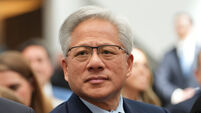
Sharon pushes Gaza withdrawal plan
Palestinians named a collective leadership, made up mainly of moderates, that will replace Mr Arafat for the time being, and called for revived statehood talks that Israel had ruled out as long as the former guerrilla leader was in charge.
World leaders voiced hope for a return to diplomacy and US President George W Bush promised Washington’s support.
“The latest events are likely to present a historic turning point in the Middle East,” Mr Sharon told reporters at his office in initial reaction to the death of the Palestinian president.
But in a later speech, he said he was resolved to press ahead with a withdrawal of Jewish settlers from occupied Gaza in 2005, citing a US promise to let Israel keep swathes of the West Bank in the process.
“The disengagement plan is first and foremost to improve Israel’s security. The need arose from the complete lack of action by the Palestinian Authority (to stop suicide bombings and other attacks),” Mr Sharon told a business conference.
“This plan has brought Israel a number of unprecedented political achievements that will help preserve our vital interests such as preventing the re-entry of Palestinian refugees and preserving large (West Bank) settlements,” he said.
He was referring to assurances Mr Bush gave him in April, endorsing “disengagement” as a way of kickstarting a stalled “road map” peace plan. Palestinians denounced the strategy as a move to deny them a state.
“Whoever wants to give up such achievements of the agreement between me and President Bush should look for other solutions,” Mr Sharon said.
He said he still wanted to reach a negotiated agreement with the Palestinians based on the internationally-backed “road map.”
But analysts see this as lip service, noting remarks by his key adviser last month who said “disengagement” was crafted to dodge negotiations and scupper a Palestinian state indefinitely.
Israeli Foreign Minister Silvan Shalom told the conference that Mr Arafat’s death marked “a new era in the Middle East ... with hope for real change.
“I have argued that Arafat was the greatest obstruction to peace and a responsible leader would openly emerge after his demise. We now put this to the test,” Mr Shalom said.
Mr Arafat had been shunned by Israel and its main ally, the US.
After Mr Arafat’s death was announced, Palestinian Foreign Minister Nabil Shaath urged “road map” talks and said there could now be no excuse for Israel to avoid them.
He said the US, United Nations and Europe should work to ensure “a meeting that will bring the two parties together, that will establish the road for them to resume negotiations.”
CONNECT WITH US TODAY



Be the first to know the latest news and updates