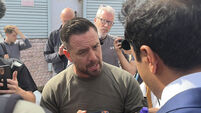
Israeli missile strike and militant arrests mar leaders’ summit
Palestinian Prime Minister Ahmed Qureia later said that the summit had been difficult and had not met Palestinian expectations.
Israel has been scornful of Palestinian leader Mahmoud Abbas’s strategy for reining in extremists, which favour persuasion over confrontation, and Israeli Prime Minister Ariel Sharon was expected to demand the Palestinian leader take aggressive action against militants.
As the summit began in Jerusalem, Israeli aircraft fired two missiles at an abandoned structure in the northern Gaza Strip, Palestinian officials and witnesses said. The Israeli army said Palestinian mortar and rocket fire had come from the area earlier in the day. No injuries were immediately reported.
The pre-dawn round-up of militants came a day after an Israeli was killed in an ambush by Palestinian gunmen in the West Bank, an attack Islamic Jihad claimed responsibility for. That shooting was the third Islamic Jihad attack in as many days. One Israeli soldier and two militants died in the previous clashes.
Israeli Defence Minister Shaul Mofaz said the military changed its tack because the Palestinian Authority has been “ineffectual” in restraining militants.
After Palestinian militants declared an informal ceasefire early this year, Israel agreed to go after only those on the brink of carrying out attacks. But with Islamic Jihad stepping up violence this week, the military decided it will no longer limit its operations to “ticking bombs”, but will go after anyone affiliated with the group, said Lt Col Erez Winner, a senior Israeli commander in the West Bank.
Khadr Adnan, an Islamic Jihad spokesperson in the West Bank, said if the Palestinian Authority and Egypt, which brokered the cease-fire declaration, do not take action to ensure Israel’s commitment to the truce, “then we will consider ourselves to be outside [it], and will call upon all Palestinian factions to do the same.”
Islamic Jihad is the smaller of the two main militant groups in the Gaza Strip and the West Bank. In addition to this week’s violence, the group carried out the deadliest single attack since the truce declaration, a February 25 bombing of a Tel Aviv nightclub that killed five Israelis.
The larger militant group, Hamas, has been relatively quiet as it tries to cement a political following ahead of upcoming Palestinian legislative elections.
The spike in violence has compromised recent efforts to co-ordinate Israel’s planned withdrawal from the Gaza Strip with the Palestinians, and stoked fears that a renewed chance for peacemaking might be lost.
The two leaders met yesterday for more than two hours - much longer than expected. Palestinian Prime Minister Ahmed Qureia said: “In all the basic issues for which we were expecting positive responses, there were none.”

CONNECT WITH US TODAY



Be the first to know the latest news and updates