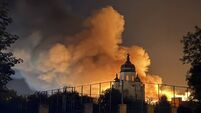
Black smoke signals more deliberation for cardinals
Vatican Radio pronounced the smoke black, meaning the 115 voting "princes" of the church would retire for the night and return to the chapel this morning for two more rounds of balloting in their search for a successor to Pope John Paul II.
If those rounds fail to produce a pope, the cardinals will hold two additional rounds this afternoon.
The cardinals, from six continents and representing 52 countries, began their secret deliberations late in the afternoon after the massive doors of the chapel were ceremonially closed.
They were casting their votes in a chapel decorated with frescoes by Michelangelo and wired with electronic jamming devices to thwart eavesdropping.
As the smoke rose from the chimney, shouts of "E bianco! E bianco!" ("It's white! It's white!") rippled through a crowd of 40,000 people packing St Peter's Square. But the cries quickly gave way to sighs of disappointment as the smoke became clearly black.
The excitement had built as darkness set in and pilgrims watched close-ups of the chimney on giant video screens.
"At first it seemed that we had a new pope, so I had a lot of emotions. But of course we didn't really expect to have a pope on the first day," said Alessia Di Caro, a 23-year-old university student.
There was initial confusion when a Vatican Radio commentator said, "It seems white," as the first puffs emerged from the chimney. But as thick, darker smoke followed, the station proclaimed it black.
"It looks like the stove wasn't working well at first," an announcer joked a few minutes later.
Black smoke signals inconclusive sessions of voting. Eventually, white smoke will tell the world that the church's 265th pontiff has been chosen to succeed John Paul, who died on April 2 at the age of 84. At some point soon after the new pope is chosen, the Vatican will also ring bells.
Before shutting themselves inside, Cardinal Joseph Ratzinger led his fellow cardinals in reading out an oath of secrecy. One by one, they then filed up to a Book of the Gospels, placed their right hands on it and pronounced a second oath to keep their sessions secret.
Cardinal Ratzinger, from Germany, has been mentioned as a leading candidate for pope.
Most of the cardinals were clad in crimson vestments and hats except for two Eastern Rite prelates Lubomyr Husar of Ukraine and Ignace Moussa I Daoud of Syria who wore black.
The cardinals chanted the Litany of the Saints as they made the short walk to the chapel, led by altar servers carrying two long, lit white candles and a metal crucifix. Cardinal Ratzinger entered the chapel last, an honour bestowed upon the dean of the College of Cardinals.
At a special pre-conclave Mass held earlier yesterday at St Peter's Basilica, Cardinal Ratzinger drew applause from fellow cardinals as he asked God to give the church a "a pastor according to his own heart, a pastor who guides us to knowledge in Christ, to his love and to true joy."
But in unusually blunt terms, he made clear what type of pastor that should be: one who should not allow "a dictatorship of relativism" the ideology that there are no absolute truths to take deeper root.
No conclave in the past century has lasted more than five days, and the election that made John Paul II pope in October 1978 took eight ballots over three days.
Cardinals faced a choice that boiled down to two options: an older, skilled administrator who could serve as a "transitional" pope while the church absorbs John Paul's 26-year legacy, or a younger dynamic pastor and communicator perhaps from Latin America or elsewhere in the developing world where the church is growing who could build on the late pontiff's popularity.
Among the issues sure to figure prominently in the conclave: containing the priest sex-abuse scandals that have cost the church millions in settlements in the United States and elsewhere; coping with a chronic shortage of priests and nuns in the West; halting the stream of people leaving a church whose teachings they no longer find relevant; and improving dialogue with the Islamic world.
"We are praying together with the church for everything to get better," said Sister Annonciata, 42, a Rwandan nun from the Little Sisters of Jesus order, who was in St Peter's Square.

CONNECT WITH US TODAY



Be the first to know the latest news and updates